How Overmolding Improves Connector Cable Assembly Performance
Connector cable assemblies are widely used in industrial automation, robotics, medical equipment, transportation, energy systems, and outdoor applications where reliability is critical.
While connector selection and cable specifications are important, the connection between the cable and connector is often the weakest point in a system. Repeated bending, vibration, moisture exposure, and mechanical stress can gradually damage this area and lead to electrical failures.
Overmolding technology provides an effective solution by creating a strong, integrated protective structure around the connector and cable transition area.
By improving sealing, strain relief, and mechanical protection, overmolding helps extend service life and improve the reliability of cable assemblies in demanding environments.
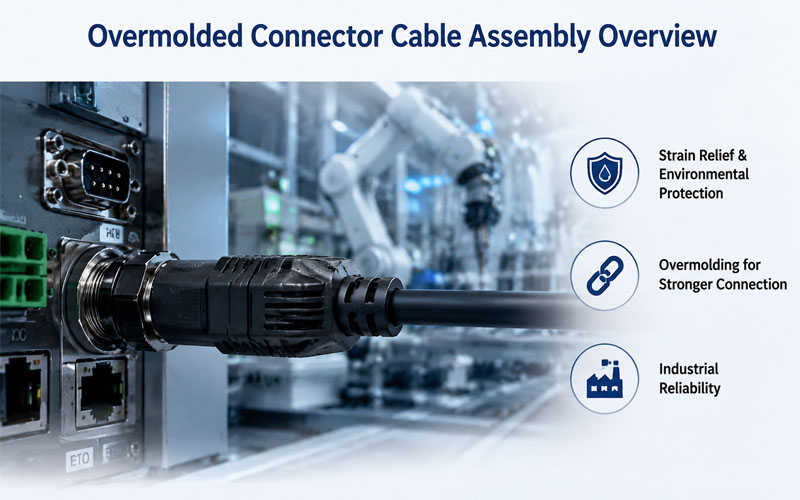
What Is Overmolding in Connector Cable Assemblies?
Overmolding is a manufacturing process where a protective material is molded directly around a connector, cable exit, or existing assembly component.
During the process:
1.The connector and cable are positioned inside a mold.
2.A thermoplastic or elastomer material is injected around the assembly.
3.The material forms a permanent protective layer.
4.The finished assembly becomes a single integrated component.
Unlike traditional methods that rely only on external boots or mechanical clamps, overmolding creates a seamless connection between the connector and cable.
Why Connector Cable Assemblies Need Overmolding
The cable exit area experiences some of the highest mechanical stress in an assembly.
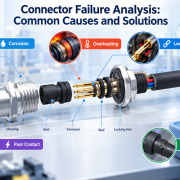
Common failure causes include:
- Repeated bending
- Pulling force
- Vibration
- Moisture penetration
- Cable twisting
- Connector loosening
Without proper protection, these stresses can cause:
- Broken conductors
- Damaged insulation
- Seal failure
- Intermittent electrical connections
- Reduced service life
Overmolding strengthens this critical transition area and improves overall assembly durability.
1.Improved Strain Relief and Mechanical Protection
One of the biggest advantages of overmolding is enhanced strain relief.
During operation, cables may experience:
- Pulling force
- Bending cycles
- Repeated movement
- Installation stress
A properly designed overmold distributes mechanical stress over a larger area instead of concentrating it at the cable exit.
Benefits include:
✔ Reduced cable fatigue
✔ Improved bend resistance
✔ Better pull-force performance
✔ Longer cable life
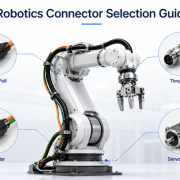
For applications such as robotics, servo systems, and moving machinery, effective strain relief is essential.
2.Enhanced Waterproof and Environmental Protection
Many industrial applications require protection against moisture, dust, chemicals, and harsh environments.
Overmolding creates a sealed structure that reduces the risk of:
- Water ingress
- Dust contamination
- Corrosion
- Chemical exposure
Depending on design and material selection, overmolded cable assemblies can support demanding protection requirements such as IP-rated applications.
Typical applications include:
- Outdoor equipment
- Industrial sensors
- Automation systems
- Medical devices
- Transportation equipment
3.Increased Vibration and Shock Resistance
Industrial environments often expose connectors to continuous vibration and mechanical impact.
Examples include:
- Robotics
- CNC equipment
- Construction machinery
- Vehicle systems
Overmolding helps secure the connector-to-cable interface by:
- Reducing connector movement
- Supporting cable orientation
- Absorbing mechanical stress
- Preventing loosening
This improves reliability in applications where equipment operates continuously.
4.Better Protection Against Contamination
Traditional connector assemblies may have gaps where dust, oil, or moisture can accumulate.
Overmolding creates a smooth external surface that helps prevent contamination buildup.
Advantages include:
- Easier cleaning
- Improved hygiene
- Reduced corrosion risk
- Better long-term stability
This is especially valuable in:
- Medical equipment
- Food processing systems
- Laboratory instruments
5.Improved Cable Assembly Durability During Installation
Cable assemblies are often exposed to handling stress before installation.
Overmolding protects critical areas during:
- Transportation
- Installation
- Maintenance
- Equipment replacement
A robust molded structure reduces accidental damage and improves field reliability.
Material Selection Matters in Overmolding
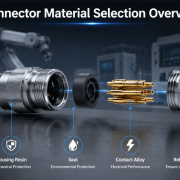
The performance of an overmolded cable assembly depends heavily on material selection.
Common materials include:
PVC
Advantages:
- Cost-effective
- Good flexibility
- Suitable for general industrial applications
TPU
Advantages:
- Excellent abrasion resistance
- High flexibility
- Good mechanical strength
Common applications:
- Robotics
- Motion systems
- Industrial automation
Silicone
Advantages:
- Wide temperature range
- Excellent flexibility
- Medical compatibility
Common applications:
- Medical equipment
- High-temperature environments
Choosing the correct material depends on:
- Temperature requirements
- Chemical exposure
- Flexing cycles
- Environmental conditions
Overmolding Design Considerations
A successful overmolded cable assembly requires careful engineering.
Important considerations include:
Cable Exit Design
The transition area must provide:
- Smooth stress distribution
- Proper bending support
- Adequate sealing
Material Compatibility
The overmold material must bond properly with:
- Cable jacket
- Connector housing
- Sealing components
Application Requirements
Engineers should evaluate:
- Static or dynamic movement
- Operating temperature
- IP protection requirements
- Mechanical loads
- Expected service life
How FPIC Provides Overmolded Connector Cable Assembly Solutions
FPIC provides customized connector cable assemblies with overmolding capabilities for industrial, medical, automation, and harsh-environment applications.
Our manufacturing capabilities include:
- Custom connector integration
- Cable assembly production
- Overmolding solutions
- Electrical testing
- High-volume manufacturing
By combining engineering design with controlled manufacturing processes, FPIC helps customers achieve reliable cable assemblies with improved mechanical protection and long-term performance.
Final Thoughts
Overmolding is more than an appearance improvement—it is a reliability enhancement technology.
By strengthening the connector-to-cable transition area, improving sealing, and reducing mechanical stress, overmolding helps cable assemblies perform reliably in challenging environments.
For OEM customers, selecting the right overmolded connector cable assembly can reduce maintenance costs, minimize failures, and extend equipment service life.
A reliable connection starts with protecting the weakest point.
FAQ
What is overmolding in cable assemblies?
Overmolding is a process where protective material is molded around a connector and cable interface to create an integrated, durable assembly.
Why is overmolding important for connector cables?
It improves strain relief, sealing, vibration resistance, and mechanical protection, helping extend cable assembly life.
Are overmolded cable assemblies waterproof?
Properly designed overmolded assemblies can provide enhanced environmental protection and support IP-rated applications.
Which materials are commonly used for cable overmolding?
Common materials include PVC, TPU, and silicone, depending on flexibility, temperature, and environmental requirements.
What applications use overmolded cable assemblies?
They are widely used in robotics, industrial automation, medical equipment, outdoor systems, transportation, and energy applications.
Need Custom Overmolded Connector Cable Assemblies?
FPIC specializes in customized connector cable assemblies with overmolding solutions for demanding industrial applications.
From connector selection and cable design to molding, testing, and mass production, FPIC provides reliable interconnection solutions designed for long-term performance.
Contact FPIC today to discuss your custom cable assembly requirements.
Resources
- IPC/WHMA-A-620 – Requirements and Acceptance for Cable and Wire Harness Assemblies
https://www.ipc.org/
Industry standard covering workmanship, inspection, and acceptance requirements for cable and wire harness assemblies. - IEC 60529 – Degrees of Protection Provided by Enclosures (IP Code)
https://www.iec.ch/
Defines protection levels against dust and water ingress for electrical equipment. - UL Solutions – Cable and Wire Safety Resources
https://www.ul.com/
Provides technical information related to cable safety, materials, and performance requirements. - ISO 10993 – Biological Evaluation of Medical Devices
https://www.iso.org/standard/68936.html
Provides evaluation guidance for materials used in medical applications. - WHMA – Wire Harness Manufacturer’s Association
https://www.whma.org/
Provides industry resources and best practices for cable assembly and harness manufacturing.