Salt Spray Testing Standards for Automotive Connectors
In the demanding world of automotive engineering, connector reliability is critical. Vehicles operate in harsh environments where temperature fluctuations, road salts, moisture, and chemical exposure can compromise connector performance over time. One of the most trusted indicators of corrosion resistance is the salt spray test—an essential part of automotive connector validation.
? What Is Salt Spray Testing?
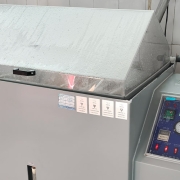
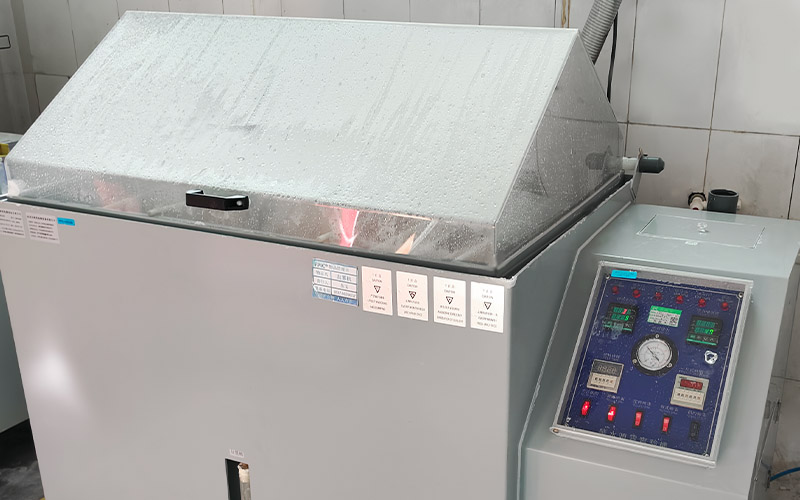
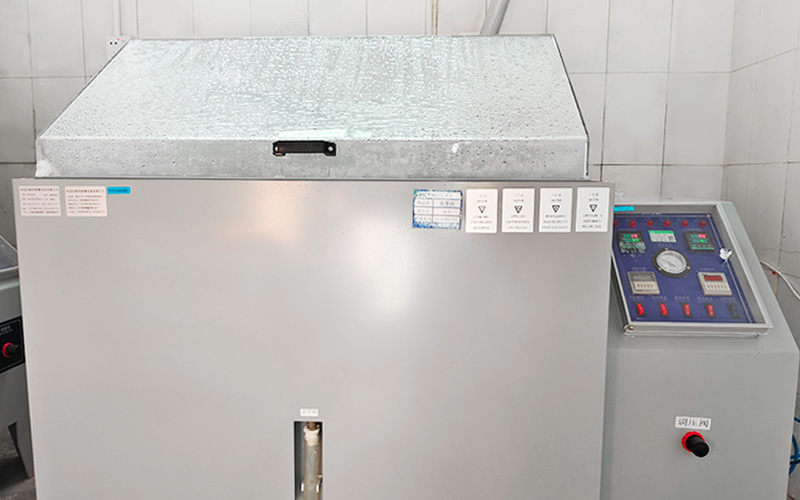
Salt spray testing, also known as salt fog testing, is a standardized corrosion test used to evaluate the resistance of surface coatings to a saline environment. It simulates accelerated aging to predict how materials and coatings will perform in long-term real-world conditions.
The test exposes connectors or components to a continuous saline mist (typically 5% NaCl solution) inside a sealed chamber at 35°C (95°F). Components are evaluated over hours or days depending on the test standard and product requirements.
? Common Salt Spray Test Standards in the Automotive Industry
Automotive manufacturers follow strict standards to ensure product durability. Some of the most widely accepted test protocols include:
ISO 9227 (NSS Test) – Neutral salt spray, globally recognized.
ASTM B117 – Commonly used across industries for corrosion testing.
IEC 60068-2-11 – For environmental testing of electrical equipment.
JIS Z 2371 – Japanese industrial standard for salt spray resistance.
OEM-Specific Standards – Like VW PV1210, Ford CETP, or GM GMW 3172, which include extended test durations and failure criteria.

? Why Salt Spray Resistance Matters for Automotive Connectors
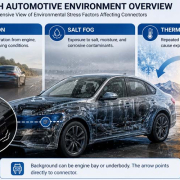
Automotive connectors are exposed to corrosive elements such as:
De-icing road salts
Humidity and water ingress
Engine fluids and chemicals
High-vibration environments
Corrosion can degrade conductivity, cause signal loss, increase contact resistance, and eventually lead to electrical failure. That’s why compliance with salt spray performance standards is crucial for any connector used in:
Powertrain systems
Battery electric vehicles (BEVs)
Energy storage modules
Sensor and control circuits
EV charging systems
? Forman’s Salt Spray Testing Capabilities
At Forman Precision Industry Co., Ltd., our automotive-grade connectors undergo rigorous in-house salt spray testing to ensure:
✅ 96 hours salt spray resistance under neutral conditions (NSS test)
✅ No visible corrosion or performance degradation
✅ Full compliance with IATF 16949 quality standards
✅ Corrosion-resistant coatings for long-term stability
✅ Application-specific design and prototyping support
? Our In-House Testing Laboratory
Equipped with environmental test chambers, our lab performs:
Salt spray & humidity testing
Thermal cycling & vibration analysis
Contact resistance & insulation testing
Cross-section analysis after exposure
Every production batch follows strict process control and traceability, ensuring product reliability from prototyping to mass production.
? Application Areas
Forman’s salt spray-tested connectors are ideal for:
EV battery connectors
Energy storage solutions
Industrial automation systems
Heavy-duty transportation & off-road equipment
? Why Choose Forman?
✅ Over 20 years in precision connector manufacturing
✅ Certified: IATF 16949, ISO 9001, VDA 19.1, ISO 14001
✅ Custom connector solutions from concept to production
✅ Fully equipped in-house testing for fast validation
✅ Trusted by global OEMs and Tier 1 suppliers
? Ready to Improve Your Connector Durability?
Partner with Forman to develop corrosion-resistant, automotive-grade connectors built to perform.
? Contact us at info@fpiconn.com
? Learn more: www.fpiconn.com
 FPIC
FPIC