High-Voltage Connectors for BESS Cabinets: Safety, Current Rating and Installation
Battery energy storage is moving fast, and the connector conversation is changing with it. In BESS cabinets, buyers are no longer looking only at whether a connector can carry power. They are also paying closer attention to electrical safety, temperature rise, installation speed, serviceability, and system-level risk control.
As BESS projects become larger and more power-dense, connector selection is becoming part of core system design rather than a late-stage component decision.
Why High-Voltage Connector Selection Is Changing in BESS
For many years, connector selection in energy storage projects often focused on a small set of basic questions: voltage class, current rating, and physical fit. That is no longer enough.
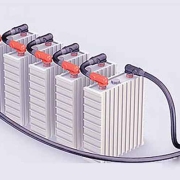
Today, BESS cabinet developers need to think about how each connection point behaves in real operating conditions. A connector sits inside a power path that may involve battery modules, busbars, rack interfaces, cabinet-level routing, and maintenance access. In that context, the connector affects much more than electrical continuity.
A high-voltage connector can influence:
- connection stability under continuous load
- temperature rise in compact cabinet layouts
- installation consistency on the production floor
- protection against polarity or mating mistakes
- service efficiency during maintenance or replacement
- long-term reliability in demanding operating environments
That is why the market is shifting from simple part supply toward more integrated thinking around safety, operability, and lifecycle risk.
Safety Comes First in BESS Cabinet Connection Design
In BESS cabinets, a power connection is not just a mechanical joint. It is part of a high-energy system where safety must be designed in from the start.
This is why high-voltage connectors are increasingly evaluated for features such as:
1. Touch-Proof Protection
In cabinet-level power systems, exposed conductive points create avoidable handling risk. A touch-proof connector structure helps reduce exposure during assembly, maintenance, and replacement.
2. Polarity Control and Mechanical Keying
As systems become more modular, polarity clarity and anti-misplug design become more important. Mechanical keying can help prevent mating errors and improve installation discipline in large-volume production and field service.ZED
3. Secure Mating and Locking
A connector should not only mate electrically. It should also provide a reliable mechanical connection that helps maintain stable contact under vibration, cable movement, and long-term use.
4. System-Level Compliance Readiness
For customers developing certified battery equipment, component selection increasingly needs to align with safety and compliance expectations early in the design process.
Current Rating Is Important, but It Is Not the Whole Story
Current rating is still a critical starting point, but it should never be treated as the only selection criterion.
In BESS cabinet design, the real question is not simply “What current is printed in the catalog?” It is “Can this connector carry the required current stably, safely, and repeatedly in the actual cabinet environment?”
That means engineers and sourcing teams should look at current rating together with:
- contact resistance stability
- conductor matching
- termination quality
- temperature rise performance
- insulation coordination
- practical routing constraints
- installation and maintenance conditions
A connector that looks sufficient on paper may still create heat, service complexity, or reliability risk if the rest of the interface design is not well matched.
Installation Efficiency Is Becoming a Competitive Advantage
As BESS cabinet production scales, installation logic matters more.
A connector that supports clearer mating, easier routing, faster assembly, and reduced torque-based work can improve both productivity and consistency. In high-volume cabinet production, even small improvements in connection time can create meaningful gains in labor efficiency and quality control.
Installation-friendly connector design can also help reduce:
- assembly errors
- cable strain
- rework time
- maintenance complexity later in the project lifecycle
This is one reason why the market is paying closer attention to connector structure, not just electrical data.
What Engineers Should Evaluate in a BESS High-Voltage Connector
When selecting a high-voltage connector for BESS cabinets, a more complete evaluation usually includes the following questions:
1. Is the voltage platform right for the target system?
The connector should match the actual architecture, whether the project is centered on 1000V, 1500V, or higher-voltage development.
2. Is the current rating suitable for continuous system conditions?
The connector should fit the expected current path without creating unnecessary thermal pressure or overdesign cost.
3. Does the structure improve safety?
Touch-proof features, polarity control, and reliable locking all contribute to safer installation and operation.
4. Does the connector fit cabinet integration needs?
Panel mounting, cable exit direction, keying, and space use all affect cabinet design quality.
5. Will service and replacement be practical later?
A connector should not make maintenance harder than it needs to be.
Where FPIC’s 2000V 450A Connector Fits
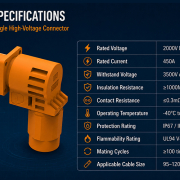
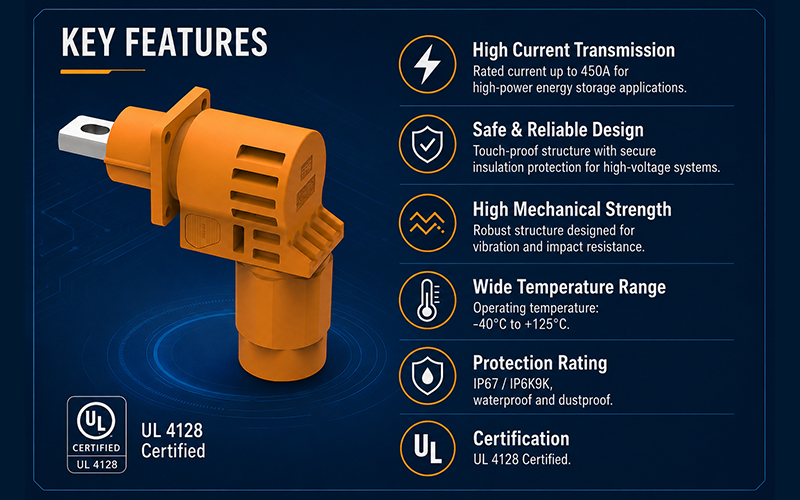
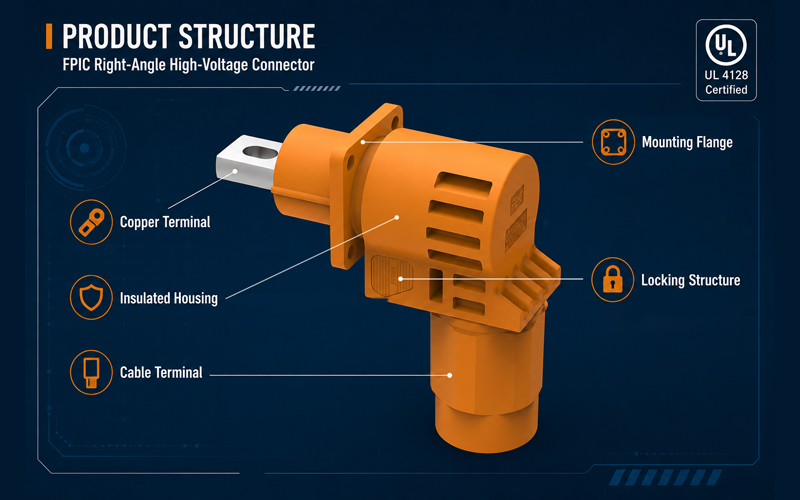
For higher-power BESS cabinet applications, FPIC’s 2000V 450A energy storage connector is positioned for customers who need a stronger high-voltage, high-current interconnection solution with a safety-oriented structure and system-integration logic.
This connector direction is particularly relevant where designers are looking for:
- higher-voltage platform support
- cabinet-level high-current interfaces
- safer handling through touch-proof structure
- clearer polarity and keying control
- more flexible routing and installation
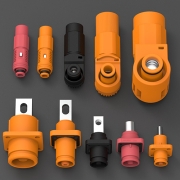
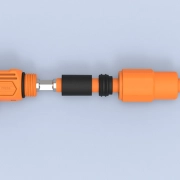
FPIC’s energy storage connector development already includes features such as touch-proof design, 360-degree rotating plug structure, multiple connection methods, and different installation keying options, which directly support the practical needs of BESS cabinet integration.
For customers moving beyond basic current transfer and toward safer, more maintainable cabinet power architecture, this matters.
Why 2000V 450A Matters in the Current Market Context
As the market shifts toward larger and more demanding storage projects, high-power connector platforms become more relevant for two reasons.
First, they help support the design of higher-density cabinet systems with more demanding power interfaces.
Second, they show that connector suppliers are not only following the storage trend, but also investing in the next layer of interconnection capability.
FPIC’s 2000V 450A series is part of that move. It is not positioned as a generic connector. It is better understood as a high-power energy storage interconnection solution for battery-system applications where safety, current path stability, and system integration all matter.
FPIC Energy Storage Connector Capability
FPIC supports energy storage connector development across multiple platform levels, including 1000V, 1500V, and higher-voltage product directions for battery-system applications.
Our energy storage connector portfolio is built around real application needs such as:
- battery module interfaces
- battery rack and cabinet connections
- high-current DC distribution paths
- safer installation and service access
For customers developing BESS cabinets, battery packs, or related high-voltage storage equipment, FPIC can support product communication and connector matching based on application requirements.
Conclusion
The role of high-voltage connectors in BESS cabinets is getting bigger, not smaller. As storage systems scale, connector selection is increasingly tied to safety, temperature control, installation efficiency, and long-term operating risk.
That is why the market is moving beyond simple part supply toward more integrated interconnection thinking.
For projects that need a stronger high-power solution, FPIC’s 2000V 450A energy storage connector provides a relevant option to support safer and more capable BESS cabinet design.
Contact FPIC
Looking for a high-voltage connector solution for BESS cabinets, battery racks, or high-current storage systems?
Contact FPIC to discuss your project requirements and connector platform options.
Email: info@fpiconn.com
Website: fpiconn.com
Resources
Reuters. Lithium producers bet on battery storage as demand shifts beyond EVs. June 24, 2026.
Molex. Designing Battery Energy Storage Systems (BESS).
Molex. Battery Pack Connections for Energy Storage Systems.
Molex. BESS Inverter Connectors.
Phoenix Contact. Connectors for Energy Storage Systems.
TE Connectivity. Battery Energy Storage Systems (BESS).
TE Connectivity. HPC 350A Connector for BESS Applications.