How to Select 2000V 450A BESS Connectors
Selecting a 2000V 450A energy storage connector for BESS cabinets requires more than checking current and voltage ratings. Engineers should verify UL certification, temperature rise performance, creepage and clearance design, IP protection, touch-proof safety, locking reliability, anti-misplug structure, and cable assembly compatibility before platform design is finalized.
To select a 2000V 450A BESS connector, focus on seven factors: certified safety, stable temperature rise, high-voltage insulation, IP protection, secure locking, anti-misplug design, and reliable cable assembly support. These requirements should be confirmed early because connector platforms are usually locked during cabinet design.
Why 2000V 450A BESS Connectors Matter
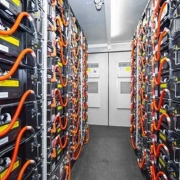
Battery energy storage systems are moving toward higher voltage, higher current, and more standardized cabinet architecture. As system integrators pursue higher energy density and faster installation, the connector is no longer a simple accessory. It becomes a safety-critical and maintenance-critical interface inside the BESS cabinet.
A 2000V 450A energy storage connector must support stable high-current transmission while helping reduce installation risk, service complexity, and long-term field failure. For this reason, connector selection should happen early in the cabinet design stage, not after the power architecture is already fixed.
For BESS cabinet designers, the right connector can help improve:
- High-voltage safety
- Installation efficiency
- Maintenance convenience
- System reliability
- Cabinet standardization
- Cable assembly consistency
- Long-term platform scalability
This is why UL certification, temperature rise, sealing, locking, and cable integration should be treated as core selection criteria.
1. Start with UL Certification and Safety Compliance
For high-voltage BESS applications, certification is one of the first items customers should verify. A connector used in a 2000V 450A system must not only carry current; it must prove that its insulation, materials, structure, and safety design can support demanding electrical conditions.
UL certification gives customers stronger confidence during project evaluation, especially when the connector will be used in energy storage cabinets, battery racks, power distribution modules, or system-level platforms that require safety documentation.
When reviewing a connector, ask these questions:
- Is the connector UL certified?
- Is the certification aligned with the intended voltage and current platform?
- Are materials suitable for high-voltage energy storage systems?
- Does the supplier provide documentation for project review?
- Can the connector be introduced into customer platforms early?
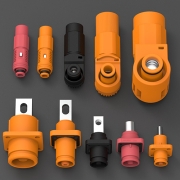
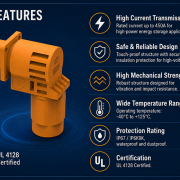
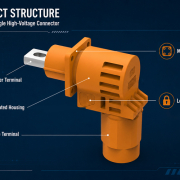
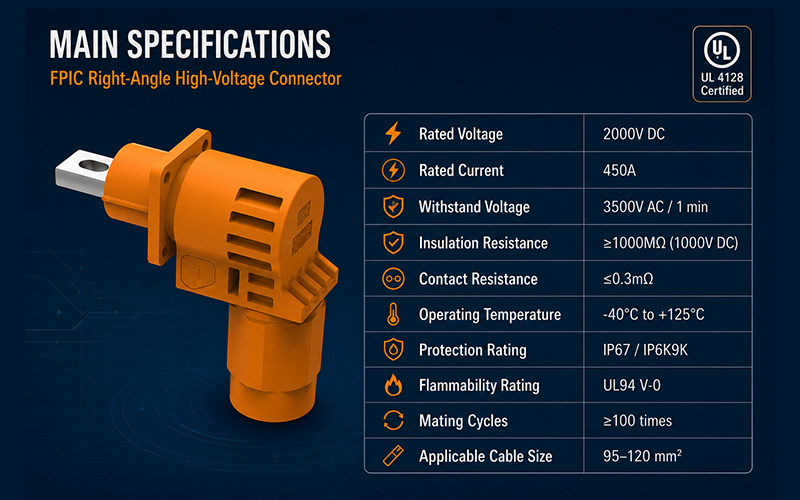
FPIC’s 2000V 450A UL energy storage connector is designed for high-voltage BESS cabinet applications where safety, compliance, and long-term reliability are essential.
2. Check Temperature Rise Under High Current
Temperature rise is one of the most important performance indicators for high-current connectors. At 450A, even small contact resistance can create heat. If heat is not controlled, the system may face higher power loss, material aging, or reliability risk.
When choosing a 2000V 450A BESS connector, engineers should not only ask for the rated current. They should also review the connector’s temperature rise performance under realistic working conditions.
Important factors include:
- Contact resistance
- Terminal structure
- Contact material
- Plating quality
- Cable size
- Crimping or termination quality
- Ambient temperature
- Cabinet ventilation conditions
A good high-current connector should maintain stable electrical performance and avoid localized overheating. For BESS cabinets, this is especially important because connectors often operate inside enclosed or semi-enclosed power systems.
FPIC supports connector and cable assembly integration, helping customers match the connector with suitable cable specifications and assembly methods to improve current-carrying stability.
3. Verify High-Voltage Insulation, Creepage, and Clearance
In a 2000V energy storage system, insulation design is critical. The connector must maintain enough electrical separation between conductive parts to reduce the risk of arcing, breakdown, or short circuit.
Three terms are especially important:
Creepage distance
The shortest path along the insulating surface between conductive parts.
Clearance distance
The shortest air distance between conductive parts.
Insulation resistance
The ability of insulating materials to prevent unwanted current leakage.
For high-voltage BESS cabinets, these parameters are often considered early in platform design. Once the cabinet layout, busbar direction, cable routing, and connector interface are fixed, changing the connector later can be costly.
That is why connector selection should be part of the system architecture review, not only a purchasing decision.
4. Choose IP Protection for Real Cabinet Conditions
BESS cabinets may operate in indoor, outdoor, or semi-outdoor environments. Even when the cabinet itself has protection, connectors may still face dust, humidity, condensation, vibration, or maintenance exposure.
A suitable energy storage connector should offer strong environmental protection. IP-rated sealing helps protect the connection area from water and dust ingress, supporting more stable long-term operation.
When evaluating IP protection, consider:
- Cabinet installation environment
- Indoor or outdoor exposure
- Humidity and condensation risk
- Maintenance frequency
- Cable outlet direction
- Sealing structure after assembly
For energy storage connectors, IP protection is not only about passing a test. It is about maintaining stable performance throughout installation, operation, inspection, and maintenance.
FPIC’s energy storage connector solutions are designed with environmental protection in mind, including sealing structures suitable for demanding power storage applications.
5. Pay Attention to Locking and Serviceability
High-current connectors used in BESS cabinets must remain secure during operation. Vibration, cable tension, installation stress, and maintenance handling can all affect connection stability.
A reliable locking design helps prevent accidental loosening and supports safer field operation.
For BESS cabinet applications, a good locking design should provide:
- Secure mating
- Clear locking feedback
- Convenient unlocking during maintenance
- Stable connection under cable stress
- Reduced risk of improper operation
Serviceability is becoming increasingly important in energy storage systems. Traditional bolted connections and busbar systems may require more assembly time and tool access. In many modern BESS platforms, maintainable connector solutions can help improve installation and maintenance efficiency.
FPIC energy storage connectors are designed to support practical cabinet installation and field maintenance requirements, helping customers improve system operation convenience.
6. Use Anti-Misplug Design to Reduce Installation Risk
In high-voltage BESS cabinets, incorrect mating can create serious safety risks. Anti-misplug design helps prevent wrong polarity connection, incorrect position matching, or mismatched connector pairing.
Key anti-misplug features may include:
- Different keying positions
- Color identification
- Positive and negative polarity distinction
- Mechanical coding
- Dedicated plug and receptacle matching
For cabinet standardization, this becomes especially valuable. When multiple connectors are installed in similar cabinet positions, clear anti-misplug design helps reduce assembly errors and maintenance mistakes.
FPIC energy storage connector solutions can support different keying and identification designs to help customers improve installation safety and platform consistency.
7. Evaluate Cable Assembly Capability
A high-voltage connector is only as reliable as its cable assembly. For a 2000V 450A connector, cable selection, stripping, crimping, sealing, strain relief, and final testing all affect long-term performance.
Customers should evaluate whether the supplier can provide complete connector and cable assembly support, not just separate components.
Important cable assembly factors include:
- Cable size compatibility
- Crimping process control
- Contact resistance control
- Pull force performance
- Sealing after assembly
- Polarity and labeling
- 100% electrical testing
- Packaging and installation protection
This is where FPIC can provide stronger project value. With connector manufacturing and cable assembly capability, FPIC can support customers from connector selection to finished cable assembly delivery, helping reduce supplier coordination and improve project consistency.
Selection Checklist for 2000V 450A BESS Connectors
Before confirming a connector platform, review this checklist:
| Selection Factor | What to Check |
| Voltage Rating | Suitable for 2000V system design |
| Current Rating | Stable 450A current-carrying performance |
| Certification | UL certification and project documentation |
| Temperature Rise | Controlled heating under high current |
| Creepage & Clearance | Safe high-voltage insulation design |
| IP Protection | Protection against dust and moisture |
| Locking Design | Secure mating and safe maintenance |
| Anti-Misplug Design | Keying, color, and polarity protection |
| Cable Assembly | Cable size, crimping, sealing, and testing |
| Supplier Support | Engineering review and mass production capability |
This checklist helps engineering and sourcing teams evaluate energy storage connectors more systematically.
Where FPIC Adds Value
FPIC’s 2000V 450A UL energy storage connector is developed for BESS cabinet applications where high-voltage safety, current stability, and serviceability matter.
FPIC supports customers with:
- 2000V 450A UL energy storage connector solutions
- High-current connector design support
- IP protection and sealing design
- Secure locking and anti-misplug structures
- Cable assembly and harness integration
- Customization for cabinet and platform requirements
- Engineering support from sample development to mass production
With 23 years of connector and cable assembly manufacturing experience, FPIC understands that BESS projects require more than a connector part number. Customers need a stable platform, certified product support, and a supplier capable of practical engineering cooperation.
Conclusion
Selecting a 2000V 450A energy storage connector for BESS cabinets requires a full system view. Voltage and current ratings are only the starting point. UL certification, temperature rise, insulation design, IP protection, locking, anti-misplug structure, and cable assembly capability all influence long-term safety and reliability.
If you are developing BESS cabinets, battery racks, or high-voltage energy storage platforms, FPIC can support your connector selection, customization, and cable assembly requirements.
Contact FPIC to discuss your 2000V 450A energy storage connector project.
Resources / References
- Future Market Insights – Energy Storage High Voltage Connector Market, 2026–2036 forecast.
- Connector Supplier – High-current connector specification trends for industrial equipment.
- FPIC internal and product information – energy storage connector features, safety design, IP protection, and cable assembly capability.
References / Notes
This article is originally written for FPIC based on energy storage connector market trends, FPIC’s product development direction, and general engineering selection principles for high-voltage BESS cabinet connectors. External market information is referenced and should be cited when published.