What Causes Connector Hot Spots and How to Prevent Them
Connector hot spots are one of the most common causes of electrical failures in industrial equipment. Excessive heat at the contact interface can lead to increased resistance, insulation damage, intermittent connections, and even complete system shutdown.
While many engineers initially suspect excessive current, overheating is often the result of multiple interacting factors, including poor contact quality, improper assembly, environmental conditions, and long-term mechanical wear.
Understanding why hot spots develop is essential for designing reliable electrical systems and reducing unplanned maintenance.
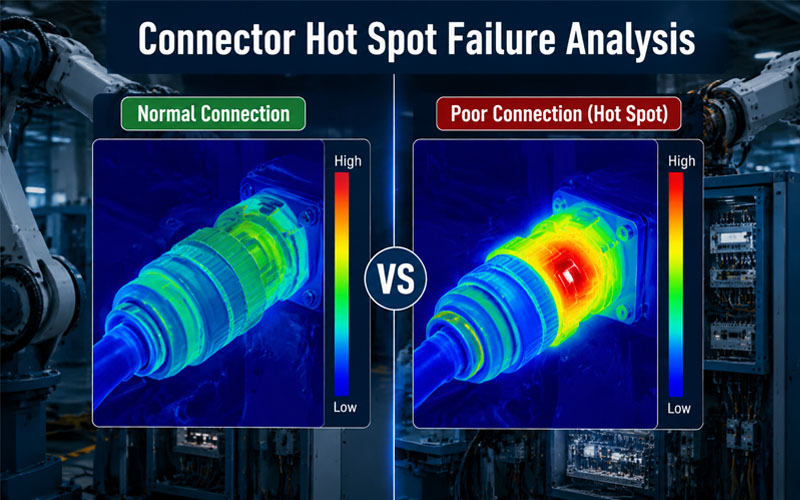
What Is a Connector Hot Spot?
A hot spot is a localized area where the connector temperature becomes significantly higher than surrounding components.
Unlike normal operating temperature rise, a hot spot indicates that electrical energy is being converted into heat due to excessive resistance at a specific location.
Typical hot spot locations include:
- Contact interfaces
- Crimp terminals
- Wire-to-terminal transitions
- Damaged contact surfaces
- Loose mechanical connections
Because the heating is localized, the problem may remain unnoticed until the connector begins to discolor, deform, or fail.
High Contact Resistance Is the Most Common Cause
Electrical power loss follows the equation:
Power = I²R
Even a small increase in contact resistance can generate substantial heat when carrying moderate or high current.
Contact resistance may increase due to:
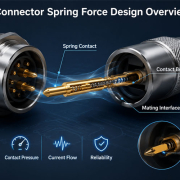
- Poor contact force
- Surface oxidation
- Contamination
- Contact wear
- Incorrect plating selection
As resistance increases, higher temperatures further accelerate oxidation, creating a self-reinforcing cycle that eventually results in connector failure.
Loose Connections Generate Excessive Heat
Mechanical stability directly influences electrical performance.
Loose terminals reduce effective contact area, increasing resistance and creating localized heating.
Common causes include:
- Improper torque
- Incomplete terminal insertion
- Connector vibration
- Repeated mechanical movement
- Poor locking mechanisms
Secure locking systems help maintain consistent contact pressure throughout the connector’s service life.
Poor Crimp Quality Can Create Hidden Hot Spots
Many overheating problems originate in the crimp rather than at the mating contacts.
Typical crimp defects include:
- Under-crimping
- Over-crimping
- Damaged conductor strands
- Incorrect wire size
- Incomplete conductor insertion
A properly designed crimp should create a gas-tight connection with minimal electrical resistance.
Routine pull-force testing and crimp cross-section analysis help verify crimp quality before production.
Contact Plating Influences Long-Term Performance
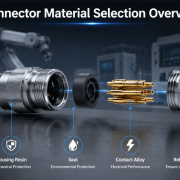
Connector plating affects corrosion resistance, wear resistance, and long-term contact stability.
For example:
Gold-Plated Contacts
- Excellent corrosion resistance
- Stable contact resistance
- Suitable for frequent mating
- Ideal for signal transmission
Tin-Plated Contacts
- Cost-effective
- Suitable for many power applications
- May oxidize more easily in humid environments
Selecting the appropriate plating helps reduce resistance growth over time.
Environmental Conditions Accelerate Overheating
Industrial connectors are frequently exposed to:
- Dust
- Moisture
- Oil
- Salt spray
- Temperature cycling
- Chemical contaminants
These conditions may increase contact resistance by promoting corrosion or contamination.
Connectors with appropriate IP protection and corrosion-resistant materials maintain more stable electrical performance throughout their service life.
Current Overload Is Not Always the Root Cause
Many overheating failures occur even when the operating current remains below the connector’s rated capacity.
Other contributing factors include:
- Poor ventilation
- High ambient temperature
- Cable bundling
- Continuous high-duty operation
- Uneven current distribution
Connector current ratings should always be evaluated together with actual installation conditions.
How to Prevent Connector Hot Spots
Preventive measures include:
- Select connectors with appropriate current ratings.
- Ensure proper terminal crimping using validated tooling.
- Maintain adequate contact force.
- Use suitable contact plating for the application.
- Prevent contamination during assembly.
- Verify locking mechanisms after installation.
- Perform thermal imaging inspections during maintenance.
- Periodically measure contact resistance in critical systems.
Addressing these factors early helps minimize temperature rise and extend connector service life.
How FPIC Improves Connector Reliability
FPIC designs and manufactures circular connectors, push-pull self-locking connectors, waterproof connectors, and custom cable assemblies for demanding industrial applications.
Our products are engineered with precision contact systems, high-quality plating options, reliable locking mechanisms, and rigorous electrical testing to help reduce contact resistance and improve long-term thermal performance. Every cable assembly is 100% electrically tested before shipment to ensure consistent quality and dependable operation.
Final Thoughts
Connector hot spots rarely result from a single issue.
Instead, they typically develop through a combination of increased contact resistance, mechanical instability, environmental exposure, and assembly quality.
By selecting appropriate connector designs, optimizing assembly processes, and implementing preventive maintenance, engineers can significantly reduce overheating risks and improve system reliability.
Reliable electrical performance starts with controlling resistance—not simply increasing current capacity.
FAQ
What causes connector hot spots?
The most common causes include increased contact resistance, loose connections, poor crimp quality, corrosion, contamination, and excessive mechanical wear.
Can a connector overheat below its rated current?
Yes. Poor contact quality or inadequate installation can create localized resistance that generates excessive heat even when current remains within the connector’s rating.
How can connector hot spots be detected?
Thermal imaging cameras, contact resistance measurements, and regular visual inspections are effective methods for identifying developing hot spots before failure occurs.
Does contact plating affect connector temperature?
Yes. Stable contact plating helps maintain low contact resistance and reduces heat generation over long-term operation, particularly in corrosive or high-cycle environments.
How can overheating be prevented?
Use properly rated connectors, ensure correct crimping, maintain secure locking, prevent contamination, and perform regular inspection and maintenance.
Looking for Reliable Connectors with Stable Electrical Performance?
FPIC provides high-quality circular connectors, push-pull self-locking connectors, waterproof connectors, and customized cable assemblies designed to minimize contact resistance and support long-term reliability in industrial automation, robotics, medical equipment, and energy storage systems.
Contact FPIC today to discuss your connector application and reliability requirements.
Resources
- IEC 60512 – Connectors for Electronic Equipment – Tests and Measurements
https://webstore.iec.ch/
Defines standardized methods for measuring contact resistance, temperature rise, durability, and electrical performance of connectors. - IEC 61076 – Connectors for Electrical and Electronic Equipment
https://webstore.iec.ch/
International standard covering the design, testing, and performance requirements for industrial and circular connectors. - TE Connectivity – Connector Reliability and Contact Resistance
https://www.te.com/
Technical resources explaining how contact resistance, terminal design, and plating affect connector reliability and thermal performance. - Molex – Understanding Connector Temperature Rise
https://www.molex.com/
Engineering guidance on current carrying capacity, connector heating, and thermal management in electrical interconnect systems. - Samtec – Contact System Design and Signal Integrity
https://www.samtec.com/
Provides technical insights into contact design, plating selection, and maintaining reliable electrical performance in high-performance connectors.