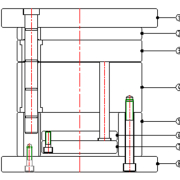
Connector Automation Design Standardization
Automation Design Standardization helps connector manufacturers build machines faster, run them more stably, and adapt them more easily to new part numbers. For USB, automotive connectors, and pin header products, modular equipment architecture can reduce engineering repetition, improve spare-part sharing, and support more predictable mass production.
If connector automation equipment is designed with standardized modules, machine builders can shorten development time, improve stability, simplify changeovers, and reduce maintenance complexity. In practice, that means reusing proven feeding, insertion, bending, inspection, and layout modules instead of redesigning each machine from the ground up.
This guide combines FPIC’s internal engineering thinking with broader automation-industry logic. It is written for product engineers, sourcing teams, and manufacturing decision-makers who want to understand why standardized automation equipment matters for connector production.
What Connector Automation Design Standardization Means
In connector manufacturing, automation design standardization means defining a repeatable machine platform: common cabinet dimensions, common hardware brands, common safety and enclosure requirements, and reusable mechanical modules for feeding, insertion, bending, inspection, and packaging.
Instead of creating every machine from scratch, engineering teams reuse mature modules and only customize the few components that truly depend on product geometry.
That is exactly how FPIC’s internal automation presentation frames the subject. The stated purpose of standardization is to improve design efficiency, use mature module mechanisms, protect machine stability, avoid unstable process structures, reduce development cost, and support product quality with a consistent design basis.
Why Standardization Matters in Connector Production
Connector automation is not just about moving parts faster. It is about building machines that can repeatedly handle small parts, tight tolerances, synchronized motion, vision checks, and frequent product-family variation without becoming fragile or expensive to maintain.
Faster Equipment Development
When feeding tracks, insertion units, bending mechanisms, and cabinet layouts are already standardized, engineering teams can launch similar machine platforms much faster.
Better Machine Stability
Mature modules have already been proven in production. Reusing them lowers the risk of introducing weak structures or unstable motion sequences into new equipment.
Easier Model Changeovers
If only a rail, plate, or bending block needs to change, the same machine can support multiple products with minimal redesign.
Lower Spare-Part Complexity
Shared wear parts across similar machine types reduce purchasing complexity, simplify maintenance planning, and shorten downtime.
Better Production-Line Layout
When equipment dimensions, cabinet heights, and machine envelopes are standardized, workshop planning becomes easier.
Start with Standard Equipment Parameters
FPIC’s internal automation design rules define several practical baseline requirements:
- Machine appearance should be clean and consistent
- Standard cabinet color should be blue
- Cabinet height should be about 800 mm
- Total machine height should stay below 2200 mm
- Machine length should stay within 2200 mm for elevator access
- Equipment should include an enclosure for dust protection, sound insulation, and noise reduction
- Preferred electrical and motion-control brands should be clearly defined, including PLC, pneumatics, servo motor, hardware, and CCD suppliers
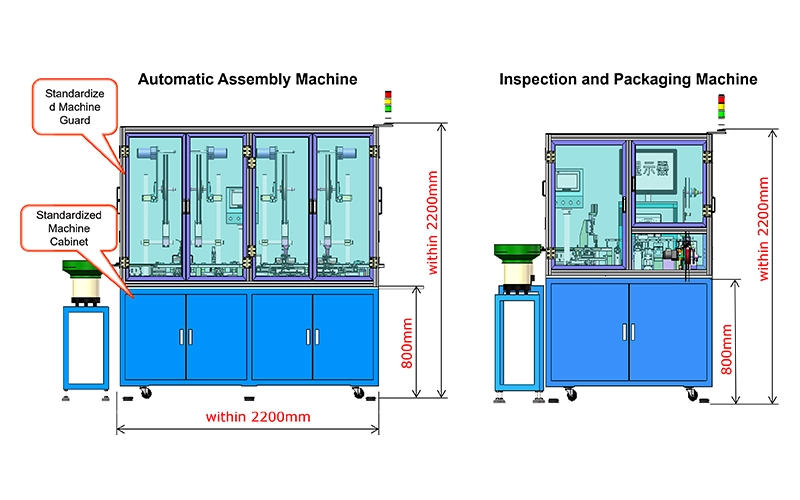
Why the Machine Platform Matters
A standardized machine platform improves factory layout, transport planning, installation efficiency, and visual consistency in production.
Why Component Standards Matter
Using defined brands and common control architecture simplifies integration, spare-parts support, training, and troubleshooting.
Modular Design in USB Connector Automation
FPIC’s automation standard for the USB series highlights several reusable machine modules:
- Standardized plastic-core feeding track module
- Standardized terminal bending and cut-off module
- Standardized metal shell loading module
- Standardized terminal insertion module
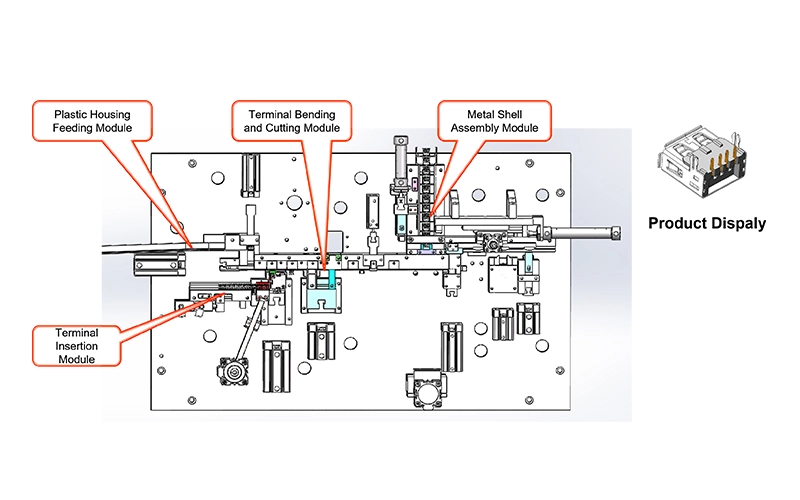
Why USB Automation Benefits from Standard Modules
Once these modules are standardized, similar USB machines can call the same structures directly.
Easier Changeover for New Part Numbers
For new part numbers, only a small number of parts need to be replaced, and some wear parts can be shared across similar platforms.
Modular Design in Automotive Connector Automation
Automotive connector production usually demands tighter control over consistency, insertion quality, and equipment uptime. FPIC’s internal standard shows the use of standardized modules for:
- Plastic housing feeding
- Terminal insertion
- Terminal bending
- Equipment layout planning for automotive connector lines
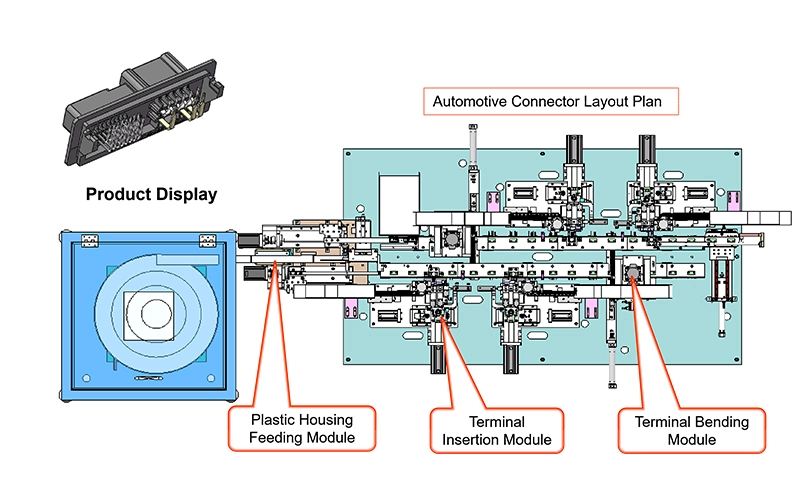
Standardized Insertion Modules
For different terminals, only the terminal-track parts need to change. For different plastic housings, only the housing-track parts need to change.
Why This Matters for Automotive Programs
This type of modularity improves manufacturing agility while keeping the machine concept stable and repeatable.
Modular Design in Pin Header Automation
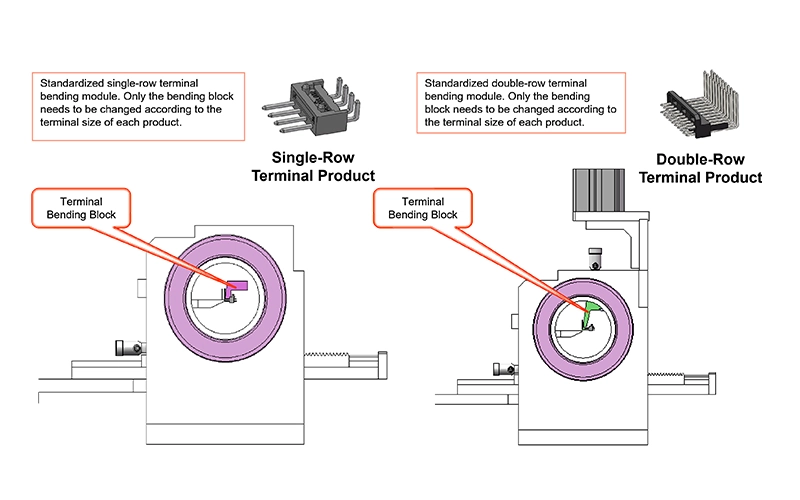
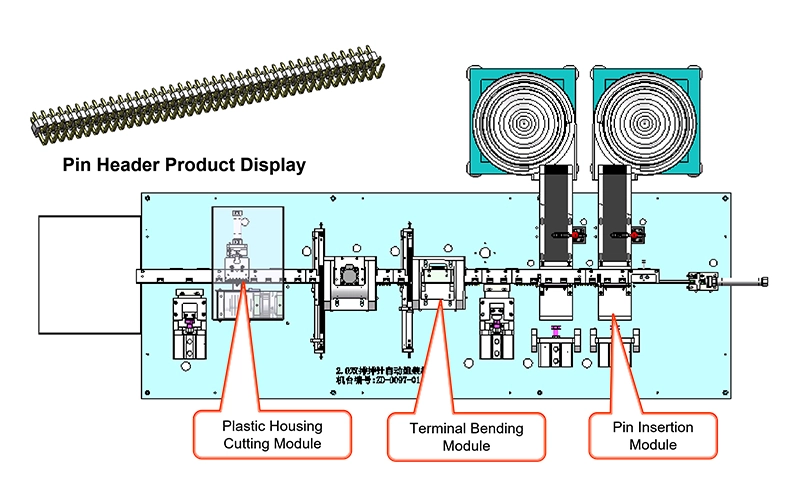
FPIC’s standardization approach also covers pin header automatic machines through modules such as:
- Plastic housing cutting module
- Terminal bending module
- Pin insertion module
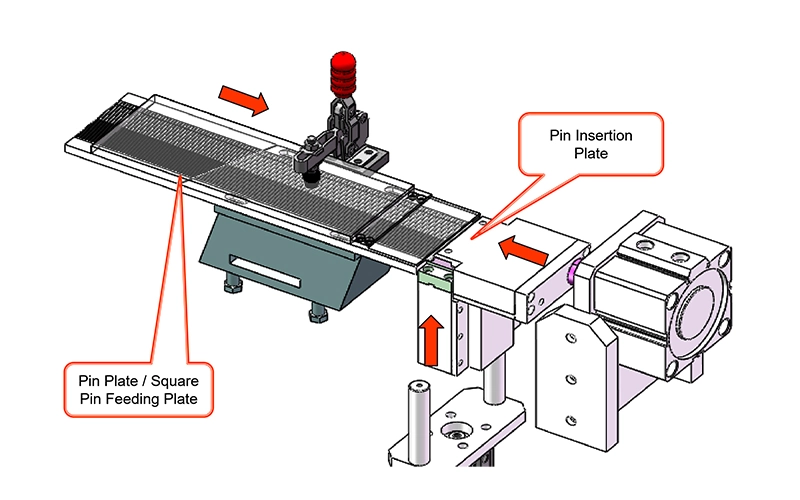
Adaptable Pin Insertion Mechanism
The square-pin feeding and insertion module is suitable for pitches such as 1.27 mm, 2.0 mm, 2.54 mm, and 5.0 mm.
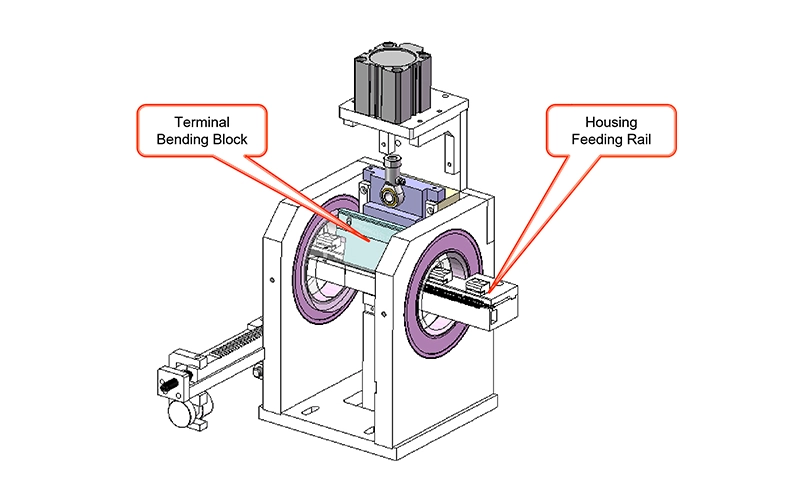
Adaptable Terminal Bending Mechanism
For different pitch products, the machine only needs the corresponding bending block to be replaced.
Adaptable Housing Cutting Mechanism
For different pin counts, production can be adjusted by changing the corresponding cutter position.
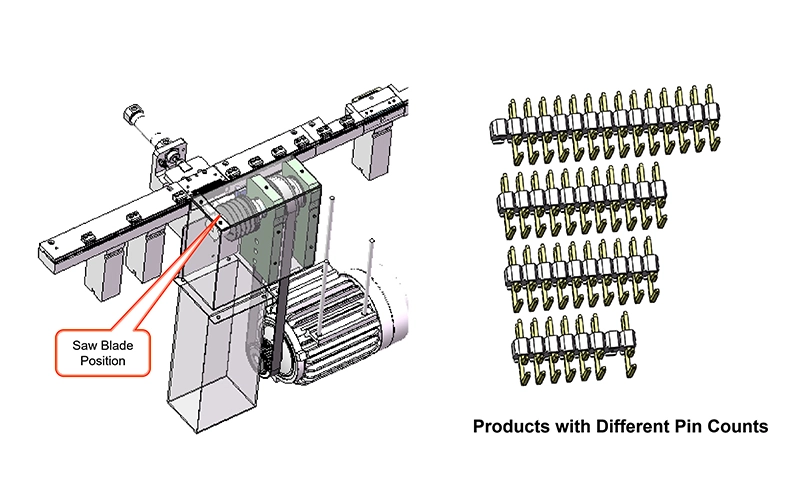
The Role of Inspection, Protection, and Noise Control
Automation standardization should not stop at motion modules. It also needs to include equipment protection and inspection design.
FPIC’s internal standard requires machine enclosures that support dust prevention, sound insulation, and noise reduction. It also specifies CCD as part of the preferred equipment ecosystem.
Why Enclosures Matter
Machine covers improve cleanliness, reduce noise, and help create a more controlled production environment.
Why Vision Integration Matters
Machine vision helps improve inspection consistency and supports more reliable connector assembly quality.
How Standardized Automation Helps Customers
From the customer side, connector automation design standardization creates several concrete benefits:
More Predictable Lead Times
A standardized machine platform reduces engineering uncertainty and usually shortens development cycles.
Better Consistency in Mass Production
Machines built on proven modules are easier to stabilize and support repeatable production quality.
Faster Support for New Part Numbers
A connector family can often share one machine platform, with only limited tooling changes.
Lower Lifecycle Cost
Shared spare parts, simpler training, and easier maintenance can reduce total cost over time.
A Practical 5-Step Framework for Standardizing Connector Automation
Step 1 – Define the Machine Platform
Set standard dimensions, cabinet structure, enclosure rules, and preferred component brands.
Step 2 – Define Reusable Motion Modules
Standardize feeding, insertion, bending, cutting, and inspection functions wherever possible.
Step 3 – Define Product Changeover Logic
Make clear which parts are common and which must change for a new model.
Step 4 – Define Inspection and Protection Standards
Build machine vision, covers, and noise-control features into the standard platform.
Step 5 – Define Layout Scalability
Ensure machines fit workshop planning, transport limits, and long-term production-line expansion.
Where FPIC Adds Value
At FPIC, we do not treat automation equipment as isolated machinery. We see it as a key part of connector manufacturing capability. Our internal engineering work on connector automation standardization covers machine purpose, technical specifications, modular reuse, and product-family adaptability across USB, automotive connectors, and pin header series.
That matters because customers increasingly need more than a single successful sample. They need a manufacturing partner that can support product evolution, part-number expansion, stable production, and practical engineering response.
If you are developing connector products that require scalable assembly automation, FPIC can support both connector manufacturing and the engineering logic behind stable production systems.
Conclusion
Connector automation design standardization is not only about internal engineering efficiency. It directly affects equipment stability, product quality, changeover speed, and the ability to scale a product family economically.
For USB, automotive connectors, and pin headers, modular machine architecture makes it easier to reuse what works, control what changes, and reduce unnecessary risk. If you are evaluating automation capability as part of your connector supply chain, standardization is one of the best questions to ask.
References / Notes
- FPIC internal engineering presentation: Standardized Design of Connector Automation Equipment.ppt (R&D Department, prepared by Qin Qinghua, dated 2026-04-15). This article incorporates FPIC’s internal design logic for machine standardization, technical parameters, and modular automation for USB, automotive connector, and pin header series.
- Rockwell Automation, Design Machines and Equipment — consistent, modularized designs reduce design labor and improve manufacturing efficiency.
- Rockwell Automation, Develop Machines and Equipment — scalable technology, reusable equipment modules, and simplified integration reduce engineering time and risk.
- Rockwell Automation, Solutions for Manufacturing and Assembly OEMs — modular, connected, data-ready machine design supports flexible manufacturing.
- Omron, Pin Connector and Cable Inspection — machine vision and modular automation architectures are widely used in electronics manufacturing inspection.
- ISA, official site — standards-based technical resources remain foundational in industrial automation.