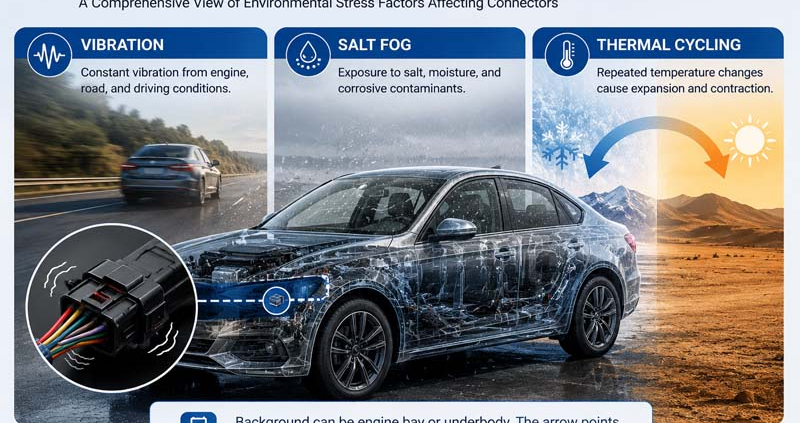
EV high voltage connectors

AI and New Energy Redefine the Connector Market — FPIC Accelerates Innovation in Automotive Connectivity

The global connector industry is undergoing a new wave of transformation. As leading connector giants TE Connectivity, Amphenol, and Aptiv released their latest financial reports, it has become evident that the forces driving market growth have shifted — from large-scale expansion to technology-driven innovation and application-specific performance.

Amid this evolution, AI computing infrastructure, new energy electrification, and advanced communication systems have become the three key growth engines shaping the future of the connector market.


1. Global Leaders Show Diverging Growth Paths

TE Connectivity: Stable Growth Driven by Industrial and Energy Segments

TE Connectivity achieved record revenue of US$4.53 billion in Q3 FY2025, up 14% year-over-year, led by its Industrial Solutions segment, which grew 30%.
This growth was mainly powered by AI data center interconnect solutions and renewable energy applications, including smart grids and clean energy systems.

Although its automotive segment only grew modestly by 2.8%, TE’s exposure to Chinese EV innovation offset global automotive slowdowns — with its HVA280 high-voltage connectors serving 800V platforms such as Xiaomi YU7 and Li Auto i8.

Amphenol: Leading the Market with AI and Communication

Amphenol posted a striking 57% revenue increase, the highest among the three, driven by AI data center interconnects, 5G, and energy transition applications.
Its communication solutions segment surged 101% year-over-year, fueled by demand for 224G high-speed backplane connectors and RF systems.
Amphenol’s active presence in China — with over 60 local facilities — shows the importance of localization and rapid manufacturing response.

Aptiv: Transitioning Through Electrification

Aptiv recorded US$5.21 billion in Q2 FY2025, up 3%, reflecting modest growth amid industry transition. Its Power Distribution Systems grew 7%, driven by rising EV high-voltage wiring harness demand, while the Advanced Safety & User Experience segment dipped slightly due to ADAS market delays.
The company continues investing heavily in China, with new R&D centers, smart manufacturing plants, and EV-focused connector factories in Changshu and Anting.


2. Market Trends: AI, New Energy, and Communication Infrastructure Lead the Way

AI & Data Center Expansion

The rise of AI computing power and hyperscale data centers has turned high-speed interconnects into essential infrastructure.
Connectors supporting 224G–800G bandwidth, low-loss signal transmission, and high-density design are now crucial for 5G-A, cloud computing, and AI training systems.

Electrification & Energy Storage

The global shift toward EVs and energy storage systems (ESS) is creating surging demand for high-voltage (800V–1500V) and high-current (350A–400A) connectors.
These connectors must combine compact design, thermal stability, safety, and long cycle life, particularly for battery packs and inverter systems.

5G-A & Satellite Communication

Emerging 5G-A base stations and low-orbit satellite networks are generating new connector demand — from mmWave RF connectors to space-grade interconnects that can handle extreme environments.


3. Industry Shift: From Scale Expansion to Technical Depth

The connector industry is no longer competing on production scale alone. Success now depends on:

  • Technical innovation and R&D capabilities,

  • Scenario-specific design expertise, and

  • The ability to deliver custom-engineered, high-reliability solutions for fast-evolving markets like AI and electrification.

This transformation highlights the growing importance of specialized manufacturers that combine agility, quality, and cost-effectiveness — precisely where Forman Precision (FPIC) stands out.


4. FPIC: Driving the Next Generation of Automotive Connectivity

As a professional automotive connector and cable assembly manufacturer, FPIC integrates design, development, validation, and manufacturing under one system — certified by IATF 16949, ISO 9001, ISO 14001, ISO 13485, and VDA 19.1.

High-Performance Automotive Connectors

FPIC’s automotive and energy storage connectors are designed for 1500V systems, capable of handling 350A–400A continuous current with excellent temperature rise control and IP67/IP68 protection.
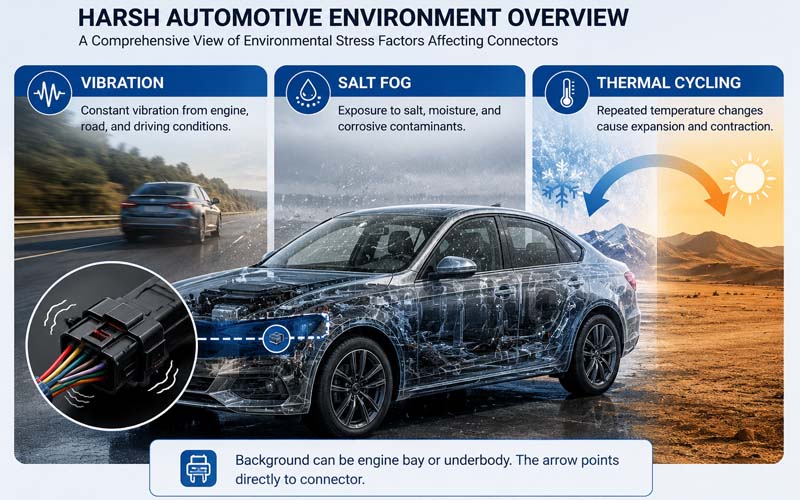
Through precision machining, optimized contact geometry, and advanced materials, FPIC ensures low resistance, high durability, and stable performance even under extreme vibration and thermal cycling.

EV high voltage connectors

Customization & Co-Development

FPIC supports full customization — from connector geometry to overmolded wiring harness integration — enabling clients to shorten development cycles and reduce total system cost.
Its cleanroom assembly lines and in-house laboratory enable comprehensive mechanical, electrical, and environmental testing, including:

  • Salt spray & vibration tests

  • Thermal shock & temperature rise analysis

  • Crimp force monitoring

  • X-ray internal inspection

Innovation for Energy Storage & Electrification

FPIC’s R&D team is actively developing next-generation 1500V 400A connectors and integrated cable assemblies tailored for EVs, battery systems, and renewable energy applications — combining safety, reliability, and scalability for global customers.


5. FPIC’s Commitment: Quality, Partnership, and Progress

At FPIC, we believe that the future of connectivity lies in precision, reliability, and collaboration.
As the global connector market evolves toward AI-driven intelligence and green electrification, FPIC remains committed to providing end-to-end engineering solutions that empower customers to lead in their industries.


📩 Contact FPIC for Customized Automotive Connector Solutions
✉️ info@fpiconn.com
🌐 www.fpiconn.com

customized automotive connectors

How Quality, Customization, and Innovation Define the Future of Automotive Connectors

The global connector market continues to evolve rapidly, driven by electrification, energy transformation, and digital intelligence. According to the latest market analysis from leading connector manufacturers such as TE Connectivity, Amphenol, and Aptiv, growth remains uneven across sectors — but automotive connectors, particularly those used in new energy vehicles (NEVs) and energy storage systems, stand out as one of the strongest engines of demand.

As a trusted global connector manufacturer, Shenzhen Forman Precision Industry Co., Ltd. (FPIC) is committed to staying at the forefront of this transformation, providing certified, customizable, and high-performance connector solutions that meet the stringent requirements of modern automotive systems.


Global Market Insights: Three Forces Shaping Connector Demand

1️⃣ Electrification and Energy Storage

The shift toward electric mobility and renewable energy continues to expand the use of high-voltage, high-current connectors. Automotive and energy storage applications now require connectors capable of handling up to 1500V and 400A, while ensuring safety, reliability, and long service life under harsh environmental conditions.

2️⃣ Digital and High-Speed Data Transmission

AI, advanced driver assistance systems (ADAS), and vehicle-to-everything (V2X) communication are creating new demand for high-speed signal connectors with robust shielding and low latency. This trend is further accelerating as automakers adopt intelligent architecture and centralized computing platforms.

3️⃣ Localization and Value Optimization

While global giants such as TE Connectivity and Amphenol lead with large-scale solutions, more OEMs and Tier-1 suppliers are turning to flexible, local manufacturing partners that can offer cost-effective, customized, and audit-ready solutions — an area where FPIC demonstrates significant competitive advantages.


FPIC Automotive Connectors: Precision, Safety, and Innovation

At FPIC, we design and manufacture automotive connector systems that combine mechanical precision, electrical reliability, and environmental endurance.
Our automotive solutions cover a wide range of applications, including battery systems, inverters, on-board chargers, signal and power distribution, and high-voltage harness assemblies.

customized automotive connectors

🔧 Certified Quality

All FPIC automotive connectors are manufactured under globally recognized standards:

  • IATF 16949, ISO 9001, ISO 14001, ISO 13485, ISO 45001, and VDA 19.1

  • Stringent process cleanliness and quality traceability throughout production

  • Fully equipped in-house laboratory for environmental, mechanical, and electrical testing, including:

    • Thermal shock & temperature rise testing

    • Salt spray & vibration testing

    • Insulation resistance & dielectric strength testing

    • X-ray imaging & KEYENCE dimensional inspection

    • Crimp force analysis and plug-in/out durability tests
      our laboratory

⚙️ Customization for Every Platform

FPIC offers end-to-end customization — from design concept to production:

  • IP67/IP68 sealing, EMI shielding, and keying/coding options

  • Flexible pin layouts, plating thickness, and housing configurations

  • Integration with wiring harness assemblies for complete energy systems

Our engineering team collaborates closely with customers to deliver prototype samples, validation testing, and mass production readiness according to PPAP, APQP, and DFMEA processes.

FPIC Customization Solution steps

🔬 Innovation in Development

FPIC’s R&D center continuously develops next-generation automotive connectors for EV and ESS platforms — balancing high current-carrying performance, compact design, and cost efficiency.
Ongoing projects include 1500V 400A energy storage connectors, combining enhanced conductivity with improved safety and reduced assembly complexity.


Why OEMs and Tier-1s Choose FPIC

Certified Quality Systems – IATF 16949 and VDA 19.1 ensure audit-ready production.
Full In-House Testing – Verification from prototype to SOP, ensuring reliability.
Rapid Customization – Flexible designs, fast sampling, and quick validation cycles.
One-Stop Solution – Connectors, cable assemblies, and harness integration under one roof.
Competitive Value – Tier-one performance with optimized cost and local manufacturing support.


FPIC’s Vision: Reliable Connection for a Smarter, Greener Future

The connector industry is at the heart of every technological revolution — from electrification to intelligent mobility.
FPIC’s mission is to empower global customers with high-quality, innovative connector solutions that enable safer, cleaner, and smarter energy systems.

With over 20 years of precision manufacturing experience, FPIC continues to expand its role as a trusted global partner in the automotive and energy sectors — delivering connection technology that drives progress.


📩 Contact Us
For technical support or customized automotive connector solutions, please contact:
info@fpiconn.com
🌐 www.fpiconn.com

Circular connector Series

At Shenzhen Forman Precision Industry Co., Ltd. (FPIC), we are proud to support global customers with high-performance connector solutions tailored to their industry needs. One of our recent success stories highlights the M12-M0282-0205-L3F circular connector, designed specifically for use in medical devices where safety, reliability, and durability are critical.

Meeting the Needs of Medical Device Applications

Medical equipment demands the highest standards of performance and compliance. Our customer required a secure, compact, and reliable M12 circular connector for their medical device to ensure accurate data transmission, stable signal performance, and ease of integration.

FPIC’s M12-M0282-0205-L3F connector was the ideal solution, offering:

  • ? High reliability in signal transmission

  • ? IP-rated protection for safety in sensitive environments

  • ? Durability with long mating cycles for daily use

  • ? Compact design suitable for medical equipment with limited installation space

Customer Visit & Positive Feedback

Recently, the customer visited FPIC to discuss project details and review our production capabilities. During the visit, they toured our R&D center, advanced testing laboratory, and automated assembly lines. They were highly impressed by our design expertise, engineering support, and quality assurance processes.

Upon reviewing our sample prototypes, the customer expressed great satisfaction with both the design solutions and product quality. They confirmed that they will place a long-term order with FPIC, strengthening our partnership and trust.

Circular connectors series

Building Long-Term Partnerships

At FPIC, we believe that every project is more than just a transaction—it is the foundation of a lasting partnership. This successful collaboration reflects our commitment to providing end-to-end solutions, from design and prototyping to mass production and testing.

We are honored to support our customer in the medical device industry and look forward to contributing to more healthcare innovations with our reliable connector technologies.

? For customized M12 connector solutions or other circular connector projects, please contact us at info@fpiconn.com.

push-pull self-locking connector

What Are the Applications for Push-Pull Self-Locking Connectors?

Push-pull self-locking connectors are compact, high-performance interconnect solutions known for their secure mating, quick-release mechanism, and excellent reliability in demanding environments. At Shenzhen Forman Precision Industry Co., Ltd. (FPIC), we specialize in manufacturing durable and customizable push-pull connectors widely used in critical industries.

push-pull self-locking connector

1. Medical Equipment

One of the most prominent applications of push-pull connectors is in the medical industry, where precision and safety are paramount. These connectors are commonly used in:

  • Patient monitoring systems

  • Ultrasound and imaging devices

  • Dental equipment

  • Surgical instruments
    Their compact design, secure locking mechanism, and high cycle durability (over 5000 mating cycles) make them ideal for life-critical applications.

2. Industrial Automation

In the industrial field, push-pull connectors are utilized in:

  • Sensor and actuator connections

  • Robotics

  • Test and measurement systems
    Their quick-connect/disconnect feature significantly reduces maintenance time, while IP67 sealing and robust materials ensure resistance to vibration, dust, and moisture.

3. Automotive & Transportation

In the automotive sector, push-pull self-locking connectors support the increasing complexity of modern vehicles by enabling fast, reliable connections in:

  • Infotainment systems

  • Diagnostic tools

  • Electric vehicle battery monitoring systems
    Their ability to withstand harsh conditions, including wide temperature ranges (-55°C to 250°C) and salt spray resistance up to 1000 hours, makes them perfect for in-vehicle and under-hood use.

4. Communication Systems

Push-pull connectors are widely used in broadcast and communication systems, particularly for:

  • Audio/video transmission

  • Base station equipment

  • Data networking
    They ensure high-frequency signal integrity and secure connection in fast-paced environments.

5. Military and Aerospace

Push-pull connectors are also suitable for defense and aerospace systems due to their reliability under extreme conditions. Typical uses include:

  • Ground communication devices

  • Navigation and radar systems

  • Portable field equipment


Why Choose FPIC Push-Pull Connectors?

  • ISO9001, ISO14001, ISO13485, and IATF16949 Certified

  • TUV and UL Certified Products

  • Over 21 Years of Connector Manufacturing Experience

  • Zero-Risk Project Development Promise

  • End-to-End Customization & Cable Assembly Service

  • 10μ” gold plating for excellent conductivity

  • Salt spray resistance: up to 1000 hours

  • Compact design saves installation space

  • Automated production ensures stable supply and high quality


Conclusion

Push-pull self-locking connectors are versatile, efficient, and built to last. Whether you are in medical, automotive, industrial, or communication sectors, FPIC’s customized solutions are designed to meet your unique connectivity needs.

? Contact us at info@fpiconn.com for samples or technical consultation.

salt spray test machine

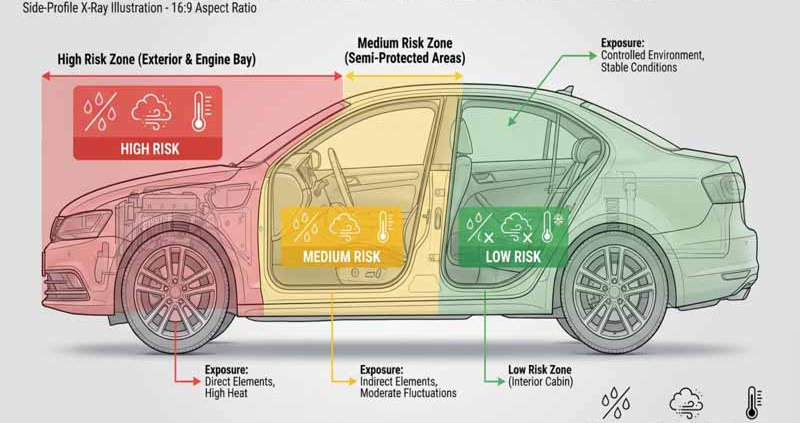
Automotive connectors are the unsung heroes behind modern vehicle electronics. From lighting control to infotainment, these tiny components ensure secure signal and power transmission in environments that are anything but gentle. Moisture, vibration, high temperatures — and especially salt — are constant threats. That’s why the salt spray test is a vital benchmark in ensuring durability and long-term performance.


What Is a Salt Spray Test?

A salt spray test (or salt fog test) is a laboratory procedure used to evaluate the corrosion resistance of materials and coatings. Connectors are placed in a sealed chamber filled with a fine mist of 5% salt solution, replicating years of exposure to harsh environmental conditions like road salt, coastal air, and chemical spray — all common in real-world automotive scenarios.

This test runs for 48, 72, or even 96 hours, with results used to validate how well a connector can withstand corrosion without compromising its structural or electrical integrity.

salt spray test machine


Why the Salt Spray Test Matters in Automotive Connectors

1. Corrosion Resistance = System Reliability

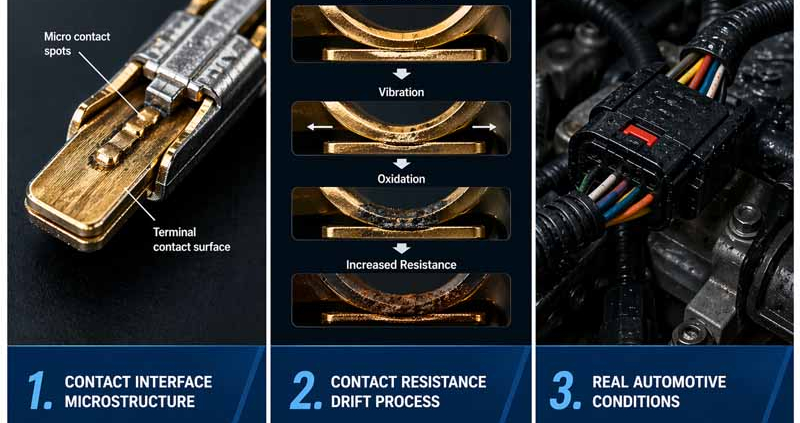
A corroded pin or terminal increases electrical resistance, which leads to signal loss, power fluctuation, or complete failure. Salt spray testing ensures that your connectors will stay conductive and safe, even in salt-rich environments like snowy roads or coastal regions.

2. Protection for Critical Functions

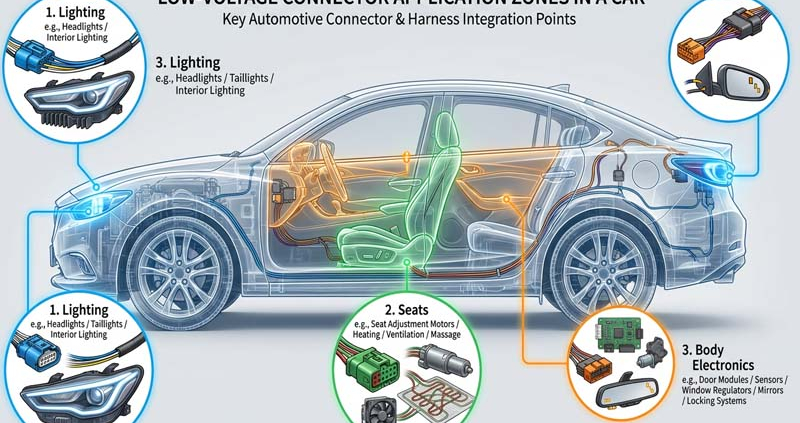
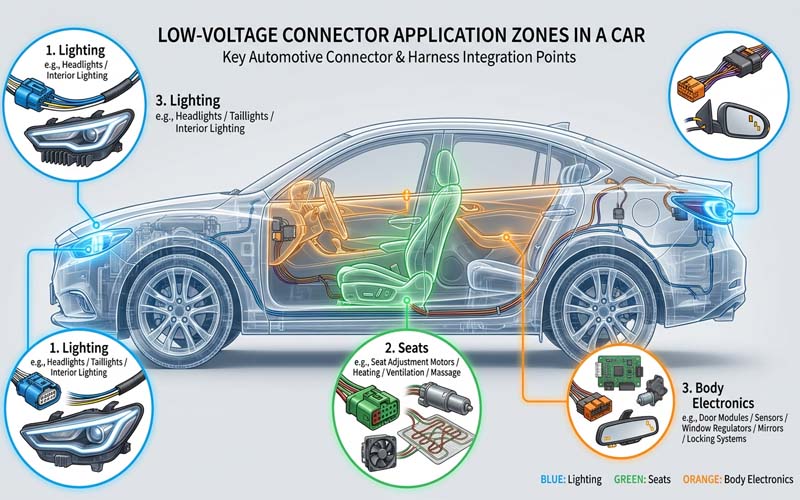
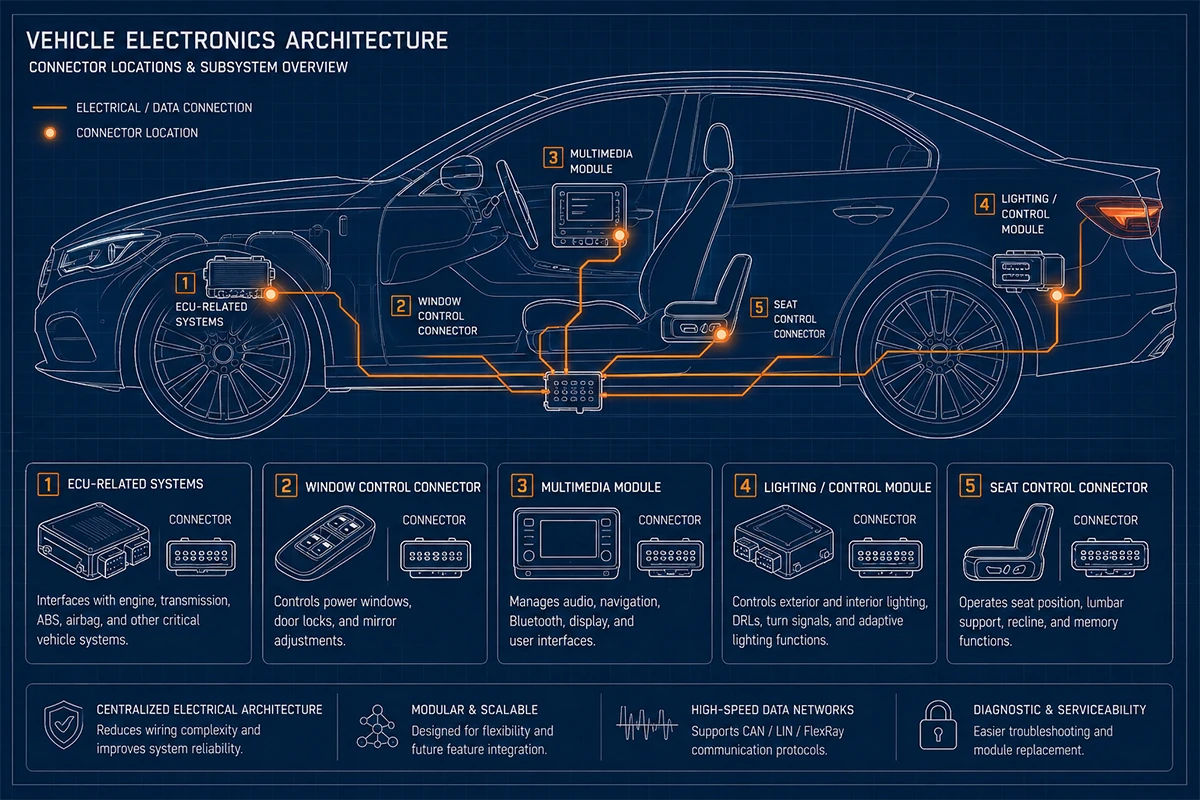
Whether it’s lighting control, power seats, electric windows, or multimedia systems, FPIC automotive connectors are designed to maintain stable performance under extreme conditions. A failed connector in these systems could mean malfunctioning lights or unresponsive controls—and customer dissatisfaction.

3. EV-Ready and High-Voltage Capable

As new energy vehicles (NEVs) become mainstream, FPIC is also investing in the development of high-voltage automotive connectors. These require even higher resistance to corrosion, as failure in high-voltage components could compromise vehicle safety and efficiency.

Salt spray testing is an essential part of validating these next-gen products for long-term field use.

4. Meeting Global Automotive Standards

Passing salt spray tests is a requirement for many OEM and Tier 1 customers who demand compliance with IATF 16949 and other international quality standards. FPIC’s automotive connectors are tested to withstand up to 96 hours of salt spray, providing proven reliability and performance.

5. Confidence for Global Applications

From the icy roads of Scandinavia to the humid coasts of Southeast Asia, salt and corrosion vary by geography. By passing this test, FPIC connectors are validated for use in global automotive platforms, regardless of climate or terrain.


How FPIC Delivers Reliable, Corrosion-Resistant Connector Solutions

At FPIC, we provide complete connector solutions for:

  • Lighting systems (headlights, taillights, ambient lighting)

  • Seat control modules and heating units

  • Power window lift systems

  • In-car multimedia and infotainment applications

  • High-voltage connections for EV platforms

Our connectors are manufactured in fully automated production lines, with processes that include:

  • Terminal forming, bending, and riveting

  • Electrical performance testing

  • CCD vision inspection for size, alignment, and appearance

  • Tape & reel packaging for SMT-ready handling

Every product undergoes strict quality checks — and is backed by our zero-risk custom development promise, ensuring you receive a solution tailored to your needs without compromise.

Automotive connector production process--new


Conclusion: Salt Spray Testing Is Not Optional — It’s Essential

The salt spray test may take place in a lab, but its impact is felt on every road, in every climate, and across every application. For FPIC, passing this test is not just about compliance — it’s about delivering automotive connectors that customers can trust in every condition.

When performance matters, and corrosion is the enemy, choose FPIC—where durability is engineered, tested, and proven.

Salt spray test standard

In the demanding world of automotive engineering, connector reliability is critical. Vehicles operate in harsh environments where temperature fluctuations, road salts, moisture, and chemical exposure can compromise connector performance over time. One of the most trusted indicators of corrosion resistance is the salt spray test—an essential part of automotive connector validation.


? What Is Salt Spray Testing?

Salt spray testing, also known as salt fog testing, is a standardized corrosion test used to evaluate the resistance of surface coatings to a saline environment. It simulates accelerated aging to predict how materials and coatings will perform in long-term real-world conditions.

The test exposes connectors or components to a continuous saline mist (typically 5% NaCl solution) inside a sealed chamber at 35°C (95°F). Components are evaluated over hours or days depending on the test standard and product requirements.


? Common Salt Spray Test Standards in the Automotive Industry

Automotive manufacturers follow strict standards to ensure product durability. Some of the most widely accepted test protocols include:

  • ISO 9227 (NSS Test) – Neutral salt spray, globally recognized.

  • ASTM B117 – Commonly used across industries for corrosion testing.

  • IEC 60068-2-11 – For environmental testing of electrical equipment.

  • JIS Z 2371 – Japanese industrial standard for salt spray resistance.

  • OEM-Specific Standards – Like VW PV1210, Ford CETP, or GM GMW 3172, which include extended test durations and failure criteria.
    salt spray test machine Salt spray test standard


? Why Salt Spray Resistance Matters for Automotive Connectors

Automotive connectors are exposed to corrosive elements such as:

  • De-icing road salts

  • Humidity and water ingress

  • Engine fluids and chemicals

  • High-vibration environments

Corrosion can degrade conductivity, cause signal loss, increase contact resistance, and eventually lead to electrical failure. That’s why compliance with salt spray performance standards is crucial for any connector used in:

  • Powertrain systems

  • Battery electric vehicles (BEVs)

  • Energy storage modules

  • Sensor and control circuits

  • EV charging systems


? Forman’s Salt Spray Testing Capabilities

At Forman Precision Industry Co., Ltd., our automotive-grade connectors undergo rigorous in-house salt spray testing to ensure:

96 hours salt spray resistance under neutral conditions (NSS test)
No visible corrosion or performance degradation
✅ Full compliance with IATF 16949 quality standards
✅ Corrosion-resistant coatings for long-term stability
✅ Application-specific design and prototyping support


? Our In-House Testing Laboratory

Equipped with environmental test chambers, our lab performs:

  • Salt spray & humidity testing

  • Thermal cycling & vibration analysis

  • Contact resistance & insulation testing

  • Cross-section analysis after exposure

Every production batch follows strict process control and traceability, ensuring product reliability from prototyping to mass production.


? Application Areas

Forman’s salt spray-tested connectors are ideal for:

  • Automotive wiring harnesses

  • EV battery connectors

  • Energy storage solutions

  • Industrial automation systems

  • Heavy-duty transportation & off-road equipment


? Why Choose Forman?

✅ Over 20 years in precision connector manufacturing
Certified: IATF 16949, ISO 9001, VDA 19.1, ISO 14001
✅ Custom connector solutions from concept to production
✅ Fully equipped in-house testing for fast validation
✅ Trusted by global OEMs and Tier 1 suppliers


? Ready to Improve Your Connector Durability?

Partner with Forman to develop corrosion-resistant, automotive-grade connectors built to perform.
? Contact us at info@fpiconn.com
? Learn more: www.fpiconn.com

Energy storage connector solutions

As the world transitions to a low-carbon future, energy storage systems (ESS) are becoming the cornerstone of modern power infrastructure. Whether supporting renewable energy, electric vehicles (EVs), or smart grids, the efficiency and reliability of these battery systems rely heavily on one often-overlooked component: the connector.

At Forman Precision Industry Co., Ltd (FPIC), we understand that high-performance energy storage connectors are not just accessories — they are essential to unlocking the full potential of battery technology. In this article, we explore the critical role that connectors play in advanced battery systems, the technologies behind them, and how we help customers deliver safer, smarter, and more efficient energy solutions.


Why Connectors Matter in Energy Storage Systems

Modern battery energy storage systems (BESS) must manage high voltage, high current, and intense thermal conditions — all while maintaining system integrity, safety, and longevity. The right energy storage connector:

  • Enables low-resistance power transmission

  • Ensures safe, secure connections under high voltage (often up to 1500V)

  • Simplifies maintenance and scalability

  • Supports modular battery pack design

  • Improves system uptime and reliability

Without high-quality, purpose-built connectors, energy storage systems risk voltage drops, heat generation, and even failure under dynamic operating conditions.


Key Types of Connectors in Battery Systems

? High-Voltage Battery Connectors

These are used in EV battery packs, grid-scale storage, and renewable energy systems. They’re engineered to support up to 1500V and currents from 100A to 350A or more, making contact resistance, insulation, and heat dissipation critical design considerations.

? Modular Energy Storage Connectors

Often used in lithium-ion battery modules and racks, these connectors allow for quick-disconnect, easy maintenance, and plug-and-play configurations — ideal for scalable ESS solutions.

? Power Connectors for Battery Management Systems (BMS)

These connectors provide signal and control data, ensuring real-time monitoring of battery temperature, voltage, and performance. They must offer stable contact, low noise, and shielding from electromagnetic interference.


Connector Design Factors that Influence Energy Storage Efficiency

Current-Carrying Capacity

High-power energy storage connectors must be engineered for low contact resistance to avoid power loss and reduce heating, improving overall system efficiency and energy density.

Thermal Management

Thermal buildup can damage batteries and reduce lifespan. Connectors designed with optimized conductor paths and heat-resistant materials improve safety and energy efficiency.

Vibration & Shock Resistance

In mobile and industrial ESS applications, connectors must withstand mechanical stress, maintaining a secure connection without performance degradation.

Ingress Protection (IP Ratings)

Connectors used in outdoor or industrial environments must meet IP67/IP68 standards, ensuring protection from dust, water, and contaminants.

Material Quality

Premium copper alloys, gold-plated or silver-plated contacts, and high-performance thermoplastics are vital for corrosion resistance, conductivity, and long service life.


FPIC’s Energy Storage Connector Solutions

At FPIC, we deliver complete connector and cable assembly solutions designed specifically for battery storage and high-voltage applications.

? Custom Prototyping – Our engineering team works closely with clients to design and develop tailored connector solutions that match voltage, current, and installation needs.
? Cable Assembly Integration – We offer factory-assembled harnesses to reduce installation errors and support modular ESS deployment.
? In-House Testing – All products undergo stringent testing, including hipot testing, insulation resistance, salt spray, and temperature cycling, ensuring compliance with UL, TUV, and CE standards.
? Fast Sampling & Scalable Production – From pilot runs to mass manufacturing, FPIC supports your product launch and scale-up timelines.


Applications of Energy Storage Connectors

Our high-voltage energy storage connectors are widely used in:

  • Grid-tied energy storage systems

  • Solar and wind energy battery backup systems

  • Electric vehicle (EV) battery packs and charging stations

  • Uninterruptible power supplies (UPS)

  • Telecom power and industrial automation


End-to-End Value with FPIC

Choosing FPIC as your energy storage connector supplier means gaining a technology partner with deep experience in:

  • Connector R&D and precision manufacturing

  • Wire harness assembly and customization

  • System-level design support for modular battery applications

  • ISO 9001, ISO 14001, IATF 16949, and VDA 19.1 certified processes

We don’t just supply components — we build long-term connectivity solutions that drive performance, safety, and scalability.

Energy storage connector solutions


Conclusion

As energy storage continues to evolve and expand, the demand for smarter, safer, and more efficient connectors will only grow. The right high-voltage connector improves thermal performance, simplifies integration, and enhances the overall reliability of battery systems.

At Forman (FPIC), we are committed to driving energy innovation forward — one powerful connection at a time.

? Ready to advance your energy storage design? Contact us today at info@fpiconn.com or visit www.fpiconn.com to explore our solutions.

high voltage connectors test

As industries rapidly evolve towards electrification, renewable energy, and energy storage systems (ESS), the demand for high-voltage connectors with superior performance and uncompromised safety is higher than ever. At Forman Precision Industry Co., Ltd (Forman), we lead the way in high-voltage connector innovation, offering customers end-to-end solutions — from custom prototyping and sampling to full mass production, backed by our own in-house testing laboratory and assembly lines.

In this article, we explore the latest engineering innovations behind high-voltage connector design, and how Forman helps customers achieve better performance, greater safety, and faster time-to-market.

high voltage connectors test


The Need for Innovation in High-Voltage Connectors

Modern energy systems — whether in electric vehicles (EVs), battery storage systems, industrial automation, or solar power plants — require connectors that:

  • Handle higher voltages and currents safely

  • Operate reliably in harsh environments

  • Offer easy installation and maintenance

  • Meet international safety and quality standards

To meet these growing demands, connector design must continually advance with new materials, smarter structures, and tighter manufacturing tolerances.


Key Innovations Driving High-Voltage Connector Design

? 1. Advanced Insulation and Sealing Technologies

Today’s connectors must withstand up to 1500V or higher, demanding superior dielectric materials and multi-layer insulation structures.

  • Enhanced creepage and clearance distances to prevent arcing

  • IP67/IP68 sealing to protect against dust, water, and contaminants

  • Thermal-resistant materials to ensure stability in high-temperature environments

At Forman, we use advanced polymer compounds and precision molding techniques to achieve the highest insulation reliability.


? 2. Compact, High-Current Designs

Space-saving without sacrificing performance is key.

  • Optimized contact geometries to support higher current loads with lower resistance

  • Smaller form factors to fit into tight system architectures

  • Shielded designs to minimize electromagnetic interference (EMI)

Forman’s high-voltage connectors are engineered for maximum current density while maintaining excellent thermal management.


? 3. User-Centric Mechanical Designs

Ease of use is critical for efficient installation and service.

  • Push-pull locking mechanisms for one-handed, secure connections

  • Color-coded interfaces and keying options to prevent misconnection

  • Quick-disconnect safety features for emergency shutdowns

Our connectors are not only reliable but engineered for intuitive and safe operation — even under high-load conditions.


Forman’s Full-Service Capabilities for High-Voltage Connectors

At Forman, we offer a true end-to-end service, bringing your project from concept to reality under one roof:

Custom Prototyping and Design Engineering

  • We support customers from early concept to functional prototypes with flexible design iterations.

  • Tailor connector size, shape, performance specs, and cable assemblies to fit your project perfectly.

Sampling and Pilot Production

  • Small-batch production available for validation testing and early-stage integration.

  • Full engineering support throughout sample refinement and optimization stages.

Mass Production

  • Scalable production with strict process control, traceability, and ISO/IATF quality certifications.

  • In-house automated assembly lines for energy storage connector assemblies with cables ensure fast, consistent output.

Comprehensive In-House Testing Laboratory

  • Electrical performance validation: Continuity, insulation resistance, hipot testing

  • Mechanical robustness tests: Vibration, tensile strength, pull force tests

  • Environmental testing: Thermal cycling, salt spray, humidity resistance

  • Advanced color analysis and dimensional inspection for 100% quality assurance

Every Forman connector is rigorously tested to meet or exceed international standards before reaching our customers.


Applications We Support

? Energy Storage Systems (ESS)
? Electric Vehicles (EV) and Charging Stations
? Industrial Automation & Robotics
? Renewable Energy Plants (Solar, Wind)
? High-Performance Battery Packs


Why Partner with Forman for Your High-Voltage Connectivity Needs?

20+ Years of Expertise in precision metal and plastic parts manufacturing
Certified Quality – IATF 16949, ISO 9001, ISO 14001, VDA 19.1, RoHS, REACH compliant
Fast Turnaround from prototyping to mass production
Customized, Scalable Solutions tailored to your project
One-Stop Service – From design to testing to final product delivery


Conclusion

As industries continue to electrify and demand higher performance, innovative high-voltage connector design will be the cornerstone of safer, more reliable systems.
At Forman, we are ready to engineer the future with you — delivering tested, proven, and customized connectivity solutions that empower your success.

? Ready to start your project? Contact us today at info@fpiconn.com — let’s innovate together! ?

energy storage connector application

As the demand for energy storage systems (ESS) grows rapidly across renewable energy, electric vehicles, and industrial sectors, the importance of reliable, high-performance connectors cannot be overstated. Energy storage connectors are critical to ensuring safe, efficient, and durable operation of these complex systems.

In this article, we’ll walk you through the best practices for selecting and installing energy storage connectors to help maximize system performance and longevity.

energy storage connector application


1. Understand Your Application Requirements

Before selecting a connector, you must clearly define the operational conditions and performance needs of your energy storage system.

? Voltage and Current Ratings
Choose connectors that can handle the system’s maximum voltage and current levels without overheating or degradation. For instance, in large battery packs, you may need 1500V high-voltage connectors capable of managing hundreds of amperes safely.

? Operating Environment
Consider environmental factors like:

  • Temperature range

  • Vibration and mechanical stress

  • Exposure to moisture, dust, or chemicals

Look for connectors with IP67/IP68 ratings and corrosion-resistant materials for outdoor or industrial settings.

? Standards and Certifications
Ensure connectors comply with relevant standards such as UL, TUV, CE, and RoHS for quality, safety, and environmental protection.


2. Choose the Right Connector Type

Depending on your system design, different types of energy storage connectors may be needed:

? High Voltage Energy Storage Connectors
Designed for large ESS systems, capable of handling high power safely and efficiently.

? Battery Storage Connectors
Specially built for modular battery pack connections, ensuring low resistance and secure locking mechanisms.

? Power Connectors for Batteries
Robust designs that handle high currents with minimal heat generation and maximum efficiency.

Tip: Always consider using shielded connectors in environments where electromagnetic interference (EMI) may be a concern.


3. Pay Attention to Connector Materials

Material selection impacts the performance, safety, and durability of connectors:

Contact Materials: Look for connectors with silver or gold-plated contacts to enhance conductivity and prevent corrosion.
Housing Materials: Choose housings made of high-grade plastics or thermoset composites for mechanical strength and thermal resistance.
Sealing Materials: Ensure sealing materials are compatible with operating temperatures and chemical exposure.


4. Best Practices for Installing Energy Storage Connectors

Proper installation is just as crucial as selecting the right connector:

? Follow Manufacturer Guidelines
Always refer to the manufacturer’s installation instructions to prevent damaging the connectors or compromising system performance.

? Secure Connections
Use proper torque specifications when tightening connectors to ensure solid, vibration-resistant electrical contact. Avoid over-tightening, which could crack housings or damage contacts.

? Inspect and Clean Mating Surfaces
Before mating, clean connectors thoroughly to remove dust, oils, or debris that could affect conductivity or sealing.

? Use Appropriate Tools
Employ recommended crimping, assembly, and installation tools to achieve proper fits and to avoid physical stress on cables and terminals.

? Double-Check Polarity and Wiring
Incorrect wiring can cause system failures or safety hazards. Always double-check wiring diagrams and polarity before final installation.


5. Plan for Maintenance and Serviceability

When designing your energy storage system, choose connectors that allow easy access for maintenance, replacement, and upgrades. Quick-connect/disconnect features can significantly reduce downtime during servicing.

Regular inspections should include:

  • Checking for signs of wear, corrosion, or overheating

  • Verifying locking mechanisms remain secure

  • Testing for electrical continuity and insulation integrity


Conclusion

Selecting and installing the right energy storage connectors is critical to ensuring the safety, efficiency, and longevity of modern energy systems. By following these best practices, manufacturers, integrators, and system designers can deliver more reliable and cost-effective energy storage solutions.

At Forman (FPIC), we specialize in high-voltage connectors, battery storage connectors, and customized energy storage solutions designed to meet the most demanding industrial and renewable energy applications.

? Need expert advice or custom connector solutions? Contact us today at info@fpiconn.com! ?

Fluid Connectors

Introduction

Selecting the right fluid connector is crucial for ensuring efficient, safe, and leak-free fluid transfer in industrial applications. Whether used in automotive, aerospace, medical, or industrial automation, the wrong connector can lead to system failures, leaks, and costly downtime.

At Shenzhen Forman Precision Industry Co., LTD (Forman), we specialize in high-performance fluid connectors designed to meet demanding industry requirements. In this guide, we’ll explore the key factors to consider when choosing a fluid connector to ensure optimal performance and reliability.


1. Understand Your Application Needs

Before selecting a fluid connector, it’s important to analyze your specific application requirements, including:

✔️ Type of Fluid – Is the system handling water, oil, chemicals, hydraulic fluid, or gas? The material and sealing must be compatible with the fluid.
✔️ Operating Pressure & Temperature – Choose a connector that can withstand high or low pressures and extreme temperatures.
✔️ Environmental Conditions – Will the connector be exposed to corrosion, moisture, dust, or vibration?
✔️ Connection & Disconnection Frequency – If frequent changes are required, a quick-connect push-pull mechanism can improve efficiency.

By understanding your specific use case, you can ensure your fluid connector meets performance, safety, and durability standards.


2. Consider the Material & Durability

The material of a fluid connector affects its strength, resistance, and longevity. Common options include:

? Stainless SteelHighly corrosion-resistant, ideal for harsh environments, chemical exposure, and high temperatures.
? Aluminum – Lightweight and durable, often used in aerospace and automotive applications.
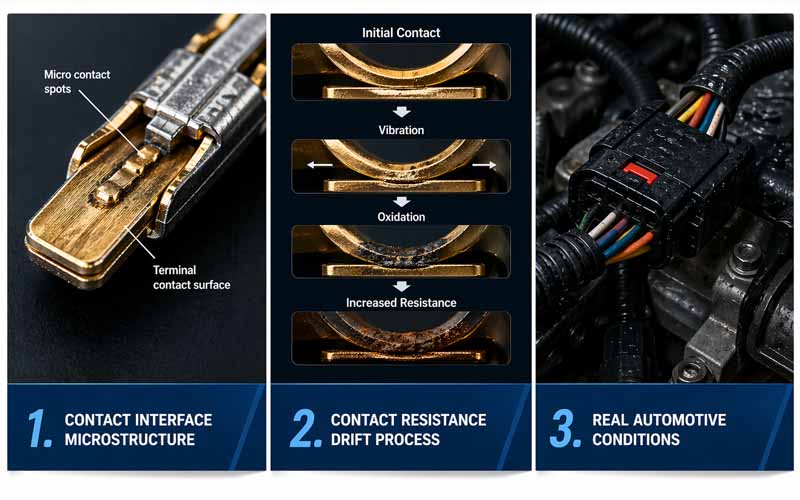
? Brass – Good for general industrial applications, offering a balance of durability and cost-effectiveness.
? Plastic & Composite Materials – Suitable for low-pressure applications, lightweight, and resistant to chemicals.

At Forman, our stainless steel connectors are built for maximum durability and corrosion resistance, ensuring long service life in demanding environments.


3. Choose the Right Locking & Connection Type

Different applications require different locking mechanisms to ensure secure and reliable fluid transfer. The most common types include:

✔️ Push-Pull Self-Locking Connectors – Quick, one-handed connection and disconnection, perfect for frequent use and fast assembly.
✔️ Threaded Connectors – Secure, high-pressure connections that require tightening but provide strong sealing.
✔️ Bayonet Coupling – Twist-lock connectors that ensure vibration resistance in high-movement applications.
✔️ Snap-On & Quick-Release Couplings – Designed for fast maintenance and tool-free assembly.

For industrial automation, medical devices, and fluid cooling systems, push-pull locking connectors offer ease of use, safety, and efficiency.


4. Ensure Leak-Proof & High-Sealing Performance

A leak-proof seal is essential for fluid efficiency, safety, and system reliability. The right sealing material should match your application’s fluid type and operating conditions.

? O-Ring & Gasket Seals – Prevent leaks and are available in various materials (NBR, EPDM, PTFE, Viton) depending on fluid compatibility.
? Metal-to-Metal Sealing – Common in high-pressure hydraulic and gas systems, providing excellent durability.
? Multi-Layer Seals – Used for extreme environments where temperature or pressure fluctuations are significant.

At Forman, our fluid connectors feature advanced sealing technology to prevent leaks even under high pressure and temperature fluctuations.


5. Verify Industry Standards & Certifications

When selecting a fluid connector, ensure it meets industry standards to guarantee quality, performance, and safety compliance. Key certifications include:

VDA 19.1 & ISO 16232-10 – Ensuring technical cleanliness for automotive and industrial applications.
IATF 16949 – Quality management standard for automotive manufacturing.
ISO 9001 – General quality assurance for consistent manufacturing.
IP67/IP68 Waterproof Ratings – Protection against dust and water ingress.

At Forman, we manufacture fully compliant fluid connectors to meet the highest industry standards for cleanliness, durability, and safety.

Fluid Connectors


6. Select the Right Connector Size & Flow Capacity

Fluid connectors must match the flow rate and system size to avoid pressure loss or restricted flow.

✔️ Hose & Port Compatibility – Ensure that the connector size matches the hose diameter and system fittings.
✔️ Flow Rate Requirements – Larger connectors allow higher fluid flow, while smaller ones are optimized for precision fluid transfer.
✔️ Pressure Drop Considerations – Selecting the correct connector bore size prevents energy loss and system inefficiency.

Forman provides customized fluid connectors to ensure perfect compatibility with your system specifications.


7. Assess Ease of Installation & Maintenance

A well-designed fluid connector should offer:

? Tool-Free Installation – Push-pull connectors allow quick, one-handed operation.
? Clear IdentificationColor-coded or labeled ports prevent connection errors.
? Durable & Low-Maintenance Design – High-quality materials reduce wear and tear, minimizing downtime.

At Forman, we design fluid connectors for quick installation, reducing labor time and improving overall efficiency.


Why Choose Forman’s Fluid Connectors?

At Forman, we provide precision-engineered fluid connectors designed for leak-proof, durable, and efficient performance in industrial applications. Our solutions offer:

✔️ High-quality stainless steel & aluminum construction for durability.
✔️ Advanced sealing technology for leak-proof connections.
✔️ Push-pull quick-locking mechanisms for ease of use.
✔️ Custom solutions to meet industry-specific requirements.
✔️ Certified manufacturing (ISO 9001, IATF 16949, VDA 19.1) ensuring global compliance.

? Looking for the perfect fluid connector for your system? Forman has the solution! ?

? Contact us today! info@fpiconn.com
? Explore our products: [Fluid Connectors]


Conclusion

Choosing the right fluid connector ensures efficient, leak-free, and long-lasting fluid transfer in industrial applications. By considering fluid compatibility, pressure requirements, locking mechanisms, sealing technology, and industry standards, you can select a connector that enhances performance and reliability.

At Forman, we are committed to delivering high-quality fluid connector solutions that meet the highest performance, cleanliness, and safety standards.

? Upgrade your fluid transfer systems today with Forman’s premium fluid connectors!

? Get in touch with us! info@fpiconn.com
? Learn more about our solutions: [Customization Solutions]