What OEM Buyers Should Check Before Approving a High-Voltage Connector Supplier
In EV, energy storage, and industrial electrification projects, high-voltage connector are safety-critical components.
A connector failure can lead to:
- vehicle shutdown
- thermal damage
- EMC issues
- field recalls
- safety risks
- costly warranty claims
For OEM buyers, supplier selection is therefore not only a purchasing decision—it is a long-term quality and risk management decision.
Yet many sourcing evaluations still focus too heavily on price and catalog specifications.
This article explains the key technical, manufacturing, and quality factors OEM buyers should review before approving a high-voltage connector supplier.
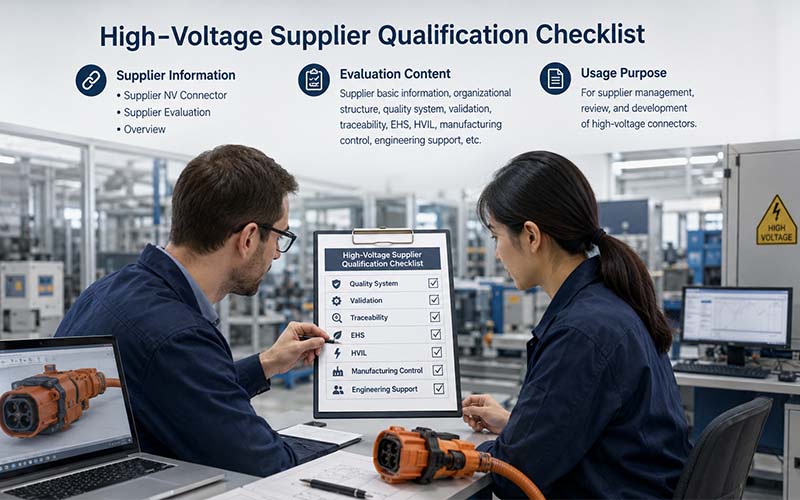
Why Supplier Evaluation Matters
A high-voltage connector supplier becomes part of the OEM’s safety chain.
The supplier’s capabilities directly affect:
- electrical reliability
- production consistency
- validation performance
- traceability
- launch timing
- long-term field reliability
Even well-designed connectors can fail if manufacturing processes are unstable.
1.Review High-Voltage Application Experience
Not all connector manufacturers have genuine high-voltage expertise.
OEM buyers should confirm experience in:
- EV battery systems
- onboard chargers
- inverters
- ESS battery systems
- industrial power electronics
High-voltage applications require different design and validation approaches compared with low-voltage connectors.
2.Verify Compliance with Automotive Quality Systems
A qualified supplier should operate under robust quality management systems such as:
- IATF 16949
- ISO 9001
- ISO 14001
OEMs should verify:
- certification status
- audit performance
- process discipline
- corrective action systems
3.Evaluate Validation Capability
Suppliers should demonstrate the ability to perform or support:
- temperature rise testing
- contact resistance testing
- vibration testing
- thermal cycling
- salt spray
- sealing validation
- HiPot testing
- insulation resistance testing
- HVIL functional validation
- EMC-related validation
Validation capability is especially important for custom connector programs.
4.Assess Engineering Support
Strong engineering support often determines project success.
OEM buyers should evaluate whether the supplier can assist with:
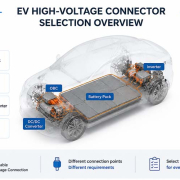
- connector selection
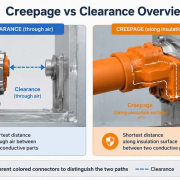
- creepage and clearance review
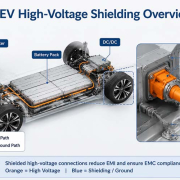
- shielding strategy
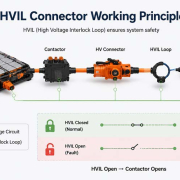
- HVIL integration
- cable routing
- DFM (Design for Manufacturability)
- tolerance analysis
Engineering responsiveness during development is critical.
5.Review Manufacturing Process Control
Manufacturing consistency is essential for high-voltage reliability.
Key areas to review include:
- crimp process control
- automated inspection
- pull force testing
- torque verification
- traceability systems
- SPC implementation
- preventive maintenance
Process discipline often matters more than equipment appearance.
6.Inspect Traceability Systems
OEMs increasingly require full traceability.
Suppliers should be able to track:
- raw materials
- terminals
- housings
- plating lots
- production dates
- operators
- inspection records
Fast containment capability reduces recall risk.
7.Check Shielding and EMC Expertise
Modern EV systems require strong EMC performance.
Suppliers should understand:
- 360° shield termination
- transfer impedance
- grounding strategy
- shielding continuity
- EMC validation requirements
This is particularly important for OBC and inverter applications.
8.Evaluate Tooling and Prototype Capability
A capable supplier should support:
- rapid prototypes
- low-volume pilot builds
- validation samples
- production tooling development
- PPAP support
Prototype responsiveness often impacts vehicle launch schedules.
9.Review Supply Chain Stability
OEM buyers should assess:
- material sourcing strategy
- dual-source capability
- inventory management
- logistics reliability
- capacity planning
Connector shortages can stop entire production lines.
10.Confirm Customization Capability
Many EV projects require customized solutions such as:
- integrated HVIL
- custom keying
- special shielding
- unique cable exits
- compact packaging
Suppliers should demonstrate flexibility without compromising quality control.
11.Audit Failure Analysis Capability
When failures occur, suppliers should provide:
- root cause analysis
- microsection capability
- contact resistance analysis
- cross-functional corrective actions
- 8D reporting
Problem-solving capability is a major supplier qualification factor.
12.Evaluate Long-Term Partnership Potential
The best suppliers act as engineering partners rather than transactional vendors.
OEM buyers should consider:
- communication efficiency
- technical transparency
- responsiveness
- launch support
- continuous improvement culture
Long-term cooperation often reduces total project risk.
Common Supplier Approval Mistakes
Selecting Only on Unit Price
Low initial pricing may create larger long-term quality costs.
Ignoring Validation Capability
Insufficient testing support delays development.
Overlooking Traceability
Weak traceability increases recall exposure.
Underestimating EMC Expertise
Shielding problems are difficult to correct late in development.
Approving Suppliers Without Process Audits
Factory discipline matters more than presentations.
Questions OEM Buyers Should Ask
Before approval, OEM buyers should ask:
- What high-voltage projects have you supported?
- What validation tests can you perform internally?
- How do you control crimp quality?
- What traceability systems are in place?
- How is EMC performance verified?
- Can you support PPAP requirements?
- What is your corrective action process?
The answers often reveal the supplier’s real maturity level.
How FPIC Supports OEM Programs
FPIC provides high-voltage connectors and cable assemblies for EV, ESS, and industrial applications.
Our support includes:
- application engineering
- custom connector development
- HVIL integration
- EMC and shielding support
- validation testing
- PPAP documentation
- traceability systems
We work closely with OEMs and Tier suppliers from prototype through mass production.
Final Thoughts
Approving a high-voltage connector supplier requires more than reviewing technical specifications.
OEM buyers should evaluate:
- engineering capability
- manufacturing discipline
- validation expertise
- traceability
- EMC understanding
- long-term support capability
A reliable supplier helps reduce technical risk, launch delays, and field failures across the product lifecycle.
FAQ
Why is supplier evaluation critical for HV connectors?
Because connector failures can directly affect safety and vehicle reliability.
Should OEMs audit connector factories?
Yes. Process control and traceability should be verified onsite whenever possible.
Why is EMC expertise important?
Poor shielding design can cause communication and system stability problems.
Is prototype capability important?
Yes. Fast prototype support accelerates development and validation.
What certifications should suppliers have?
IATF 16949 and ISO 9001 are commonly expected in automotive programs.
Looking for a Reliable High-Voltage Connector Partner?
FPIC supports OEM and Tier projects with custom high-voltage connector and cable assembly solutions backed by engineering support, validation capability, and controlled manufacturing.
Contact us to discuss your EV or ESS connector program requirements.
Resources
- IATF 16949 Automotive Quality Management Standard
Global automotive quality management requirements. - USCAR-2 Automotive Connector Performance Specification
Environmental and electrical validation requirements. - LV214 Automotive Connector Validation Standard
Connector qualification requirements used by major OEMs. - ISO 6469 – EV Safety Requirements
Safety specifications for electrically propelled vehicles. - TE Connectivity – High Voltage Connectivity Solutions
Engineering guidance for EV high-voltage interconnect systems.