How to Select High-Voltage Connectors for Battery Pack, OBC and DC/DC Interfaces
High-voltage connectors are critical interfaces in electric vehicles (EVs), battery energy storage systems (ESS), and industrial electrification platforms.
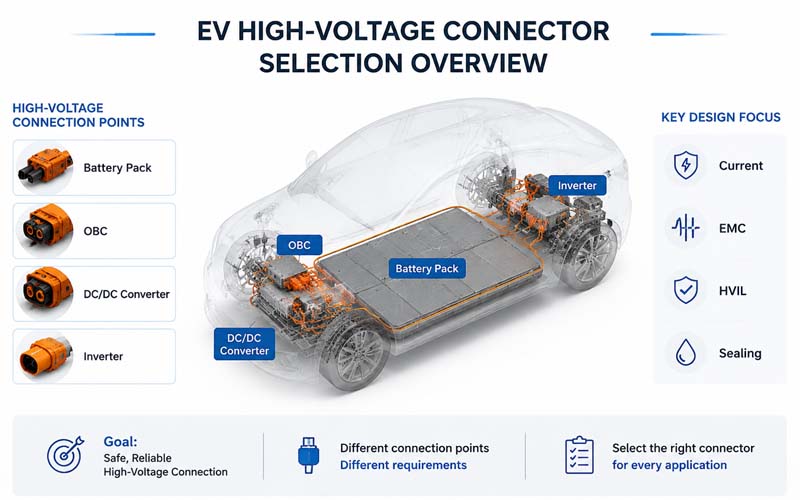
They connect major subsystems such as:
- battery packs
- onboard chargers (OBC)
- DC/DC converters
- inverters
- power distribution units (PDU)
Although these connectors may appear similar, each application has distinct electrical, mechanical, thermal, and EMC requirements.
This article explains how engineers can select the right high-voltage connector for battery pack, OBC, and DC/DC interfaces.
Step 1: Define Electrical Requirements
The first step is to establish the electrical operating conditions.
Key parameters include:
- nominal and maximum voltage
- continuous current
- peak current
- allowable temperature rise
- insulation resistance requirements
- dielectric withstand requirements
For example:
- Battery pack connectors may carry several hundred amps.
- OBC connectors typically carry lower current but may require excellent shielding.
- DC/DC connectors often combine high current and compact packaging.
Step 2: Evaluate Safety Requirements
High-voltage connectors must meet electrical safety expectations such as:
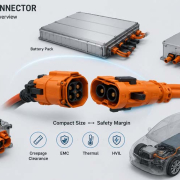
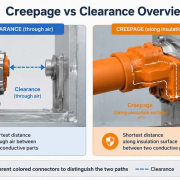
- creepage and clearance distances
- touch-safe design
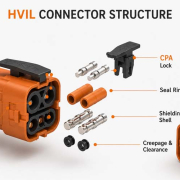
- HVIL integration
- CPA locking features
- ingress protection
Safety requirements depend on standards, OEM specifications, and application risk assessments.
Step 3: Consider Mechanical Packaging
Packaging constraints strongly influence connector selection.
Important factors include:
- available installation space
- cable bend radius
- mating access
- keying and polarization
- mounting method
Compact designs often require trade-offs between size and performance.
Step 4: Assess Environmental Conditions
Connectors must survive the real operating environment.
Consider:
- temperature range
- vibration
- humidity
- salt exposure
- dust and water ingress
- chemical exposure
Battery pack connectors usually require high sealing performance.
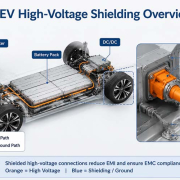
Step 5: Review EMC and Shielding Needs
Applications near switching power electronics may require:
- shielded cable interfaces
- 360° shield termination
- conductive backshells
- low-impedance grounding
OBC and DC/DC interfaces are especially sensitive to EMC requirements.
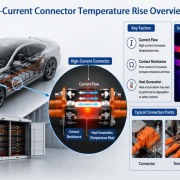
Step 6: Confirm Current Carrying Capability
Current rating should be validated using:
- conductor size
- terminal design
- contact resistance
- thermal rise testing
- cooling conditions
Do not rely solely on catalog current ratings.
Step 7: Evaluate Contact Technology
Important considerations include:
- contact material
- plating system
- contact normal force
- resistance stability
Reliable low-resistance performance is essential for high-current applications.
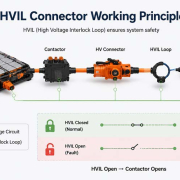
Step 8: Determine HVIL Requirements
Many EV systems require integrated HVIL circuits.
HVIL is commonly used in:
- battery pack connectors
- service disconnects
- OBC interfaces
Verify interlock sequencing and connector compatibility.
Step 9: Consider Serviceability
Field maintenance may require:
- easy disconnect
- visual mating confirmation
- ergonomic locking mechanisms
- replacement without removing adjacent components
Serviceability is particularly important for battery packs.
Step 10: Validate Supplier Capability
Evaluate whether the supplier can provide:
- application engineering support
- prototype samples
- custom cable assemblies
- validation reports
- PPAP documentation
- production traceability
Supplier capability is as important as connector specifications.
Typical Priorities by Application
Battery Pack Connectors
Primary concerns:
- high current capacity
- HVIL
- sealing
- vibration resistance
- serviceability
OBC Connectors
Primary concerns:
- EMC shielding
- compact size
- thermal performance
DC/DC Connectors
Primary concerns:
- current density
- packaging
- shielding
- temperature performance
Common Selection Mistakes
Choosing Based Only on Current Rating
Thermal and environmental performance must also be verified.
Ignoring Shield Termination
Can create EMC problems.
Overlooking Service Access
May complicate maintenance.
Underestimating Packaging Constraints
Can lead to late redesign.
Not Defining Validation Requirements Early
Delays supplier qualification.
Validation Tests to Request
Typical validation activities include:
- temperature rise
- contact resistance
- vibration
- thermal cycling
- sealing tests
- HiPot and insulation resistance
- HVIL functional testing
- EMC testing
How FPIC Supports High-Voltage Connector Selection
FPIC provides custom high-voltage connectors and cable assemblies for EV, ESS, and industrial systems.
Our engineering support includes:
- application analysis
- connector selection
- HVIL integration
- shielding design
- prototype development
- validation testing
We help customers balance safety, EMC performance, packaging, and cost.
Final Thoughts
Selecting the right high-voltage connector requires a system-level view.
Engineers should consider:
- electrical requirements
- insulation design
- shielding
- environmental exposure
- serviceability
- supplier capability
A well-chosen connector improves reliability, safety, and manufacturability across the entire product lifecycle.
FAQ
What is the most important factor when selecting a high-voltage connector?
There is no single factor. Voltage, current, safety, environment, and packaging must all be considered.
Do all EV high-voltage connectors require HVIL?
Not all, but HVIL is widely used for safety-critical interfaces.
Why is shielding important for OBC connectors?
OBC systems generate switching noise that can affect EMC performance.
Can catalog current ratings be used directly?
They should be verified under actual operating conditions.
What validation tests are typically required?
Temperature rise, vibration, sealing, HiPot, and HVIL functional testing.
Selecting High-Voltage Connectors for Your EV or ESS Project?
FPIC provides engineering support and custom high-voltage connector and cable assembly solutions for battery packs, OBCs, and DC/DC converters.
Contact us to discuss your application requirements.
Resources
- ISO 6469 – Safety Specifications for Electrically Propelled Vehicles
Core safety requirements for EV high-voltage systems. - LV215 / LV214 Automotive High-Voltage Connector Standards
Requirements for high-voltage connectors and cable assemblies. - USCAR-2 – Automotive Connector Performance Specification
Environmental and electrical validation methods. - TE Connectivity – EV High Voltage Connector Selection Guide
Practical guidance for subsystem connector selection. - Molex – EV Power Connectivity Solutions
Connector technologies for battery and power electronics.