Connector Design Trade-Offs in 800V Systems: Compact Size vs Safety Margin
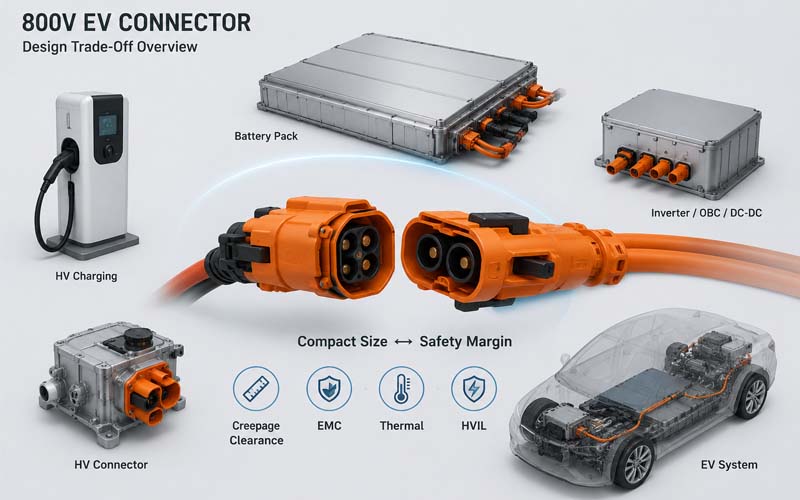
The transition from 400V to 800V vehicle architectures is reshaping the design of high-voltage connector.
Automakers are adopting 800V systems to support:
- faster charging
- higher power density
- improved drivetrain efficiency
- reduced cable weight
However, increasing system voltage creates new engineering challenges.
Connector designers must balance two competing objectives:
- minimizing size and weight
- maintaining adequate electrical safety margins
This trade-off affects nearly every aspect of connector development, from insulation design to thermal performance and EMC behavior.
Why 800V Systems Change Connector Design
At first glance, an 800V connector may appear similar to a 400V connector.
In reality, the higher operating voltage increases the importance of:
- insulation coordination
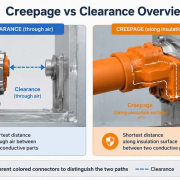
- creepage distance
- clearance distance
- dielectric performance
- contamination resistance
- transient voltage withstand capability
The design window becomes significantly smaller.
The Industry Push Toward Compact Packaging
Vehicle manufacturers constantly seek:
- lighter vehicles
- smaller power electronics
- tighter battery packaging
- reduced installation space
As a result, connectors are expected to deliver:
- higher voltage
- higher current
- smaller size
These requirements often conflict with each other.
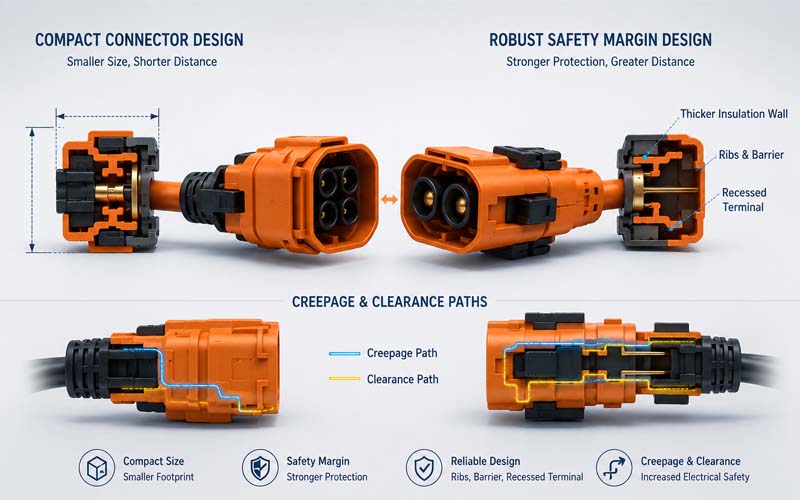
The Creepage and Clearance Challenge
One of the most significant design constraints is maintaining sufficient electrical spacing.
Higher voltages generally require:
- larger clearance distances
- longer creepage paths
- improved insulation structures
However, increasing spacing also increases connector size.
Designers often use:
- insulating ribs
- internal barriers
- recessed terminals
- optimized conductor geometry
to maximize electrical separation within limited packaging volume.
Safety Margin vs Minimum Compliance
Meeting a standard requirement is not always enough.
A connector may technically comply with a specified spacing requirement while having limited margin for:
- manufacturing tolerances
- contamination
- aging
- vibration
- environmental exposure
Experienced engineers typically design beyond minimum values to improve robustness.
Thermal Performance Trade-Offs
Higher voltage systems often support higher power levels.
To reduce size, designers may attempt to:
- reduce terminal dimensions
- decrease connector footprint
- increase current density
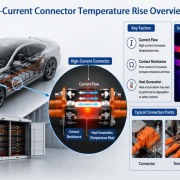
These changes can increase:
- contact temperature
- thermal stress
- material aging
Thermal validation becomes increasingly important in compact 800V designs.
Shielding and EMC Constraints
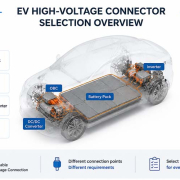
Modern 800V systems contain:
- traction inverters
- onboard chargers
- DC/DC converters
- high-speed communication networks
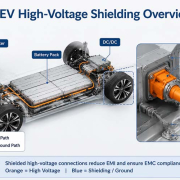
Effective shielding often requires:
- metal shells
- conductive backshells
- 360° shield termination
These features consume valuable packaging space.
Reducing connector size may compromise EMC performance if shielding design is not carefully optimized.
HVIL Integration Challenges
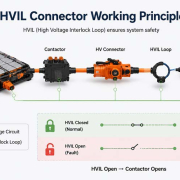
Many 800V connectors incorporate HVIL (High Voltage Interlock Loop) functionality.
Additional HVIL contacts require:
- dedicated space
- mechanical protection
- routing paths
- insulation separation
Compact packaging increases the complexity of integrating these safety functions.
Mechanical Durability Considerations
Smaller connectors are often more sensitive to:
- tolerance variation
- vibration
- mating misalignment
- terminal movement
Maintaining long-term durability while reducing size requires careful mechanical design.
Environmental Sealing Trade-Offs
800V connectors frequently require:
- IP67 protection
- IP68 protection
- chemical resistance
- pressure resistance
Adding robust sealing features increases:
- connector volume
- mating force
- manufacturing complexity
Yet inadequate sealing can significantly reduce safety margins.
Material Selection Becomes More Important
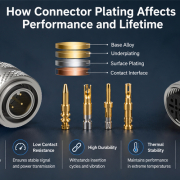
Material choice directly influences:
- dielectric strength
- CTI performance
- thermal stability
- mechanical durability
Higher-performance materials may allow more compact designs but often increase cost.
Manufacturing Tolerance Considerations
A design that appears acceptable in CAD may become risky in production.
Engineers must account for:
- molding variation
- terminal positioning tolerance
- assembly variation
- wear over product life
Reduced safety margins leave less room for manufacturing variation.
Validation Requirements for 800V Connectors
Because design margins are tighter, validation becomes more critical.
Typical tests include:
- HiPot testing
- insulation resistance testing
- thermal cycling
- vibration testing
- humidity exposure
- salt spray
- EMC validation
- HVIL functional testing
Validation should simulate real operating conditions whenever possible.
Common Design Mistakes
Optimizing Only for Size
Electrical safety margins may become insufficient.
Ignoring Long-Term Aging
Material degradation can reduce insulation performance.
Underestimating EMC Requirements
Shielding limitations often appear late in development.
Relying Solely on Standard Minimums
Minimum compliance does not guarantee robustness.
Reducing Validation Scope
Aggressive packaging requires more testing, not less.
The Best Approach: Balanced Engineering
Successful 800V connector design is not about achieving the smallest possible package.
It is about balancing:
- electrical safety
- thermal performance
- EMC performance
- manufacturability
- reliability
- serviceability
The most reliable connectors typically incorporate appropriate engineering margin rather than pursuing extreme miniaturization.
How FPIC Supports 800V Connector Development
FPIC develops high-voltage connectors and cable assemblies for EV, ESS, and industrial electrification applications.
Our engineering support includes:
- 800V connector architecture review
- creepage and clearance optimization
- HVIL integration
- shielding design
- thermal validation
- prototype development
- production manufacturing support
We help customers balance compact packaging with long-term reliability and safety.
Final Thoughts
The move to 800V architectures creates significant opportunities for vehicle performance and charging efficiency.
However, higher voltage leaves less room for design mistakes.
Engineers must carefully balance:
- size
- weight
- insulation performance
- thermal behavior
- EMC requirements
- durability
In high-voltage connector design, safety margin is not wasted space—it is often the foundation of long-term reliability.
FAQ
Why are 800V connectors more challenging than 400V connectors?
Higher voltage increases insulation and safety requirements while packaging space continues to shrink.
Can connector size always be reduced?
Not without affecting safety margin, thermal performance, or EMC behavior.
Why are creepage and clearance more critical in 800V systems?
Higher voltage increases the risk of arcing and surface tracking.
Does compact packaging affect EMC?
Yes. Reduced space can limit shielding effectiveness and grounding paths.
Should engineers design beyond minimum standard requirements?
In many applications, additional safety margin improves long-term reliability.
Developing an 800V EV or ESS Platform?
FPIC provides custom high-voltage connectors and cable assemblies designed for 800V architectures, combining compact packaging, robust insulation design, and validated reliability.
Contact us to discuss your high-voltage interconnect requirements.
Resources
- ISO 6469 – Electrically Propelled Vehicle Safety Requirements
Safety requirements for high-voltage EV systems. - IEC 60664-1 – Insulation Coordination for Low-Voltage Systems
Fundamental guidance on creepage and clearance. - LV214 / LV215 High-Voltage Automotive Connector Standards
Automotive connector validation and design requirements. - USCAR-2 Automotive Connector Performance Specification
Connector reliability and environmental test requirements. - TE Connectivity – High Voltage EV Connectivity Solutions
Industry guidance on EV high-voltage interconnect design.