FPIC Connectors for Medical Clinic Equipment and Healthcare Electronics
Modern healthcare facilities depend on more than medical expertise. Behind many diagnostic tools, examination devices, monitoring systems, imaging-related equipment, and clinic operation devices, reliable electronic components play an important role in supporting stable performance.
From women’s health screening to pregnancy care and minimally invasive procedures, modern clinics rely on accurate equipment, safe electrical systems, and dependable internal connections. For medical device and healthcare equipment manufacturers, connector reliability can directly affect product stability, service life, and user confidence.
In Singapore, healthcare providers such as PK Women’s Clinic offer pregnancy care, women’s wellness screening, fertility-related consultation, contraception advice, gynecological care, and minimally invasive surgery services. Their modern women’s healthcare environment reflects the growing need for reliable clinical equipment and professional medical support.
For the equipment behind these healthcare applications, connectors and cable assemblies help ensure stable power transmission, signal accuracy, and long-term operation.
Why Reliable Connections Matter in Medical Clinic Equipment
Medical and clinic equipment often requires stable performance, accurate signal transmission, and safe electrical operation. Many devices may include sensors, display modules, control boards, power units, switches, cables, and internal wiring assemblies.
If a connector or cable assembly is unstable, equipment may experience:
- Signal interruption
- Power instability
- Sensor reading errors
- Display or control failure
- Increased maintenance requirements
- Reduced equipment service life
- Lower user confidence
For healthcare equipment manufacturers, reliable connection design is not only a matter of assembly efficiency. It is also connected to product safety, consistency, and long-term field performance.
Common Medical and Clinic Equipment Using Connectors
1. Diagnostic and Examination Devices
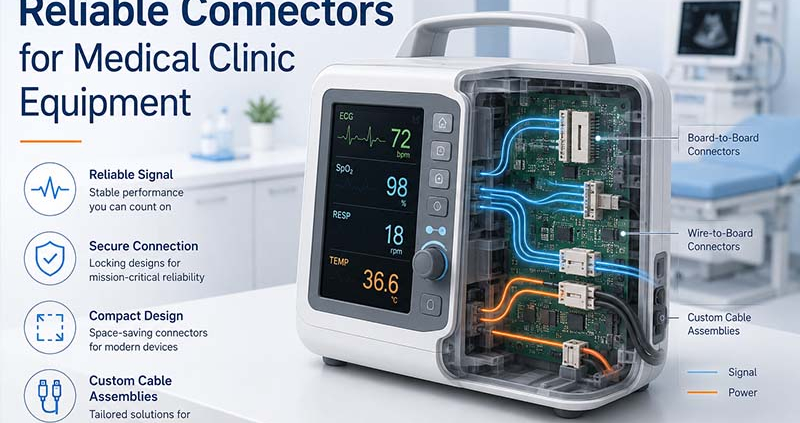
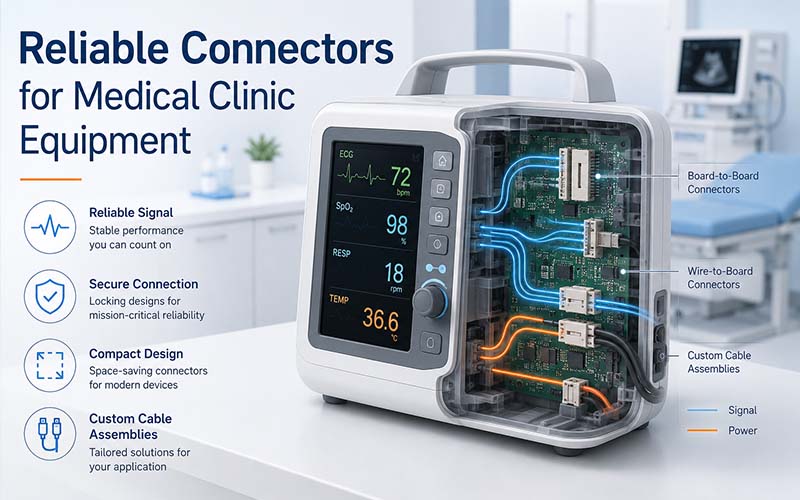
Diagnostic and examination devices may include display modules, sensors, internal control boards, and power systems. These components require secure wire-to-board connectors, board-to-board connectors, and cable assemblies to support stable operation.
Compact and reliable connector design can help manufacturers improve internal layout and reduce connection failure risks.
2. Monitoring and Measurement Equipment
Monitoring and measurement equipment depends on accurate signal transmission. Poor contact or unstable wiring may affect data collection, device response, or display output.
High-quality cable assemblies help support consistent signal performance between sensors, control boards, and user interfaces.
3. Portable Healthcare Devices
Portable medical and healthcare devices often require compact structure, lightweight cable routing, and durable internal wiring. These products may also need repeated handling and long-term use.
Customized cable assemblies can help optimize device structure, reduce assembly errors, and improve product durability.
4. Clinic Operation and Support Equipment
Beyond diagnostic devices, clinics may also use supporting equipment such as disinfection devices, air treatment systems, power modules, digital check-in terminals, and control systems. These applications also require stable power and signal connections.
For manufacturers of clinic support devices, reliable connectors help reduce downtime and improve product usability.
Key Connector Requirements for Healthcare Electronics
1. Stable Signal Transmission
Medical and healthcare electronics often depend on accurate data and signal transfer. Stable connector contact helps reduce the risk of intermittent signal loss.
2. Compact Internal Design
Many clinic devices are designed to be compact, portable, or space-efficient. Wire-to-board and board-to-board connectors can help optimize PCB layout and internal structure.
3. Reliable Power Delivery
Control boards, displays, sensors, pumps, motors, and measurement modules require stable power transmission. Proper connector and terminal design supports safer device operation.
4. Customized Cable Routing
Different healthcare devices have different internal structures. Customized cable assemblies can match exact length, connector direction, wire specification, labeling, shielding, and installation requirements.
5. Consistent Quality Control
For healthcare-related equipment, consistent production quality is critical. Connector manufacturers should support material control, process inspection, electrical testing, and batch consistency.
How FPIC Supports Healthcare Equipment Manufacturers
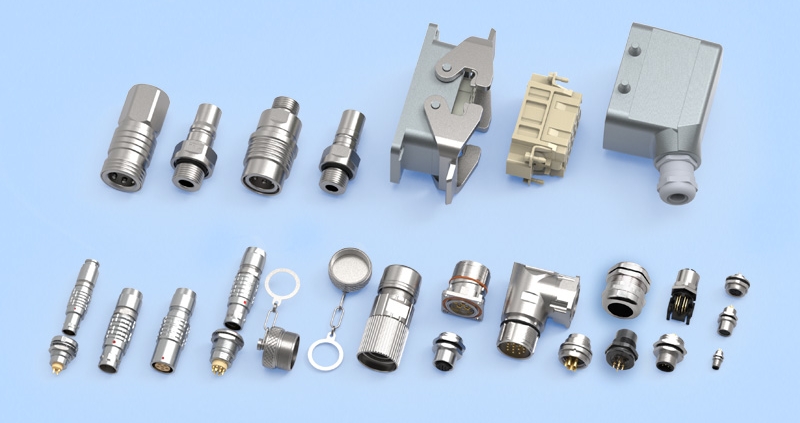
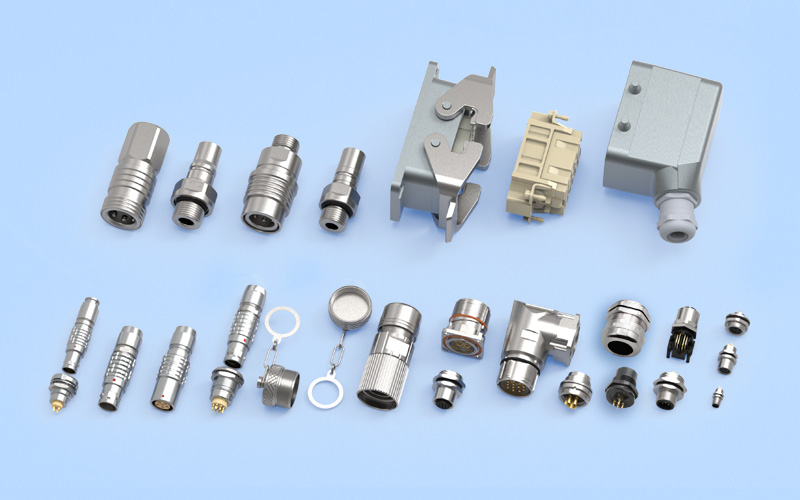
FPIC provides customized connector and cable assembly solutions for electronic devices, industrial equipment, medical-related applications, automotive systems, energy storage products, and smart equipment.
For healthcare equipment manufacturers, FPIC can support projects from early design review to prototype development and mass production.
Our capabilities include:
- Wire-to-board connectors
- Board-to-board connectors
- Custom cable assemblies
- Internal wiring harnesses
- Power and signal connection solutions
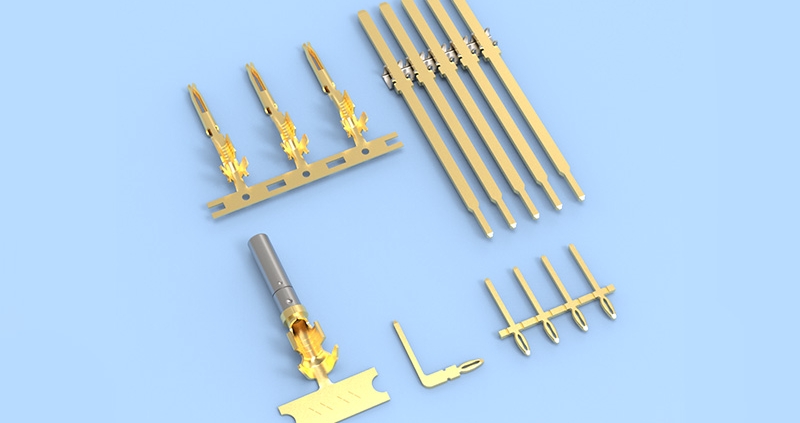
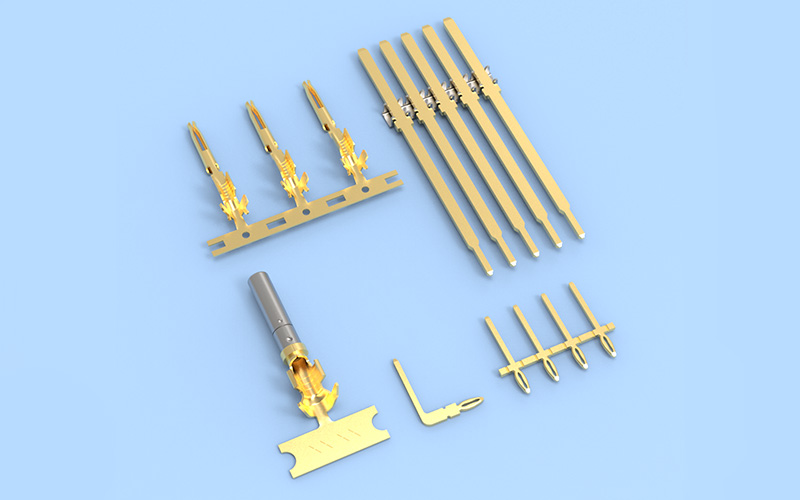
- Precision plastic and metal components
- OEM and ODM connector development
- Automated production and electrical testing
- Engineering support for customized projects
FPIC also supports customized cable and connector design for applications requiring stable connection performance, compact structure, and long-term reliability.
Reliable Healthcare Equipment Starts from Reliable Components
Modern healthcare services depend on professional medical teams and reliable equipment. Clinics such as PK Women’s Clinic, a women’s specialist clinic in Singapore, show how medical service providers combine professional care, women’s health screening, pregnancy care, and modern clinical support to serve patients through different life stages.
For the manufacturers behind clinical equipment, reliable connectors and cable assemblies are essential components. From diagnostic devices to monitoring equipment and clinic support systems, every internal connection contributes to stable operation, safer performance, and better user experience.
FPIC supports healthcare equipment manufacturers with customized connector and wiring solutions designed for stable power, signal, and device integration.
FAQ
1. What connectors are commonly used in medical clinic equipment?
Medical clinic equipment may use wire-to-board connectors, board-to-board connectors, power connectors, signal connectors, terminal connectors, and customized cable assemblies.
2. Can FPIC customize cable assemblies for healthcare equipment?
Yes. FPIC can customize cable length, connector type, wire specification, terminal structure, shielding, labeling, and assembly method according to project requirements.
3. Why are connectors important for medical devices?
Reliable connectors help maintain stable power and signal transmission, reducing the risk of device malfunction and improving long-term reliability.
4. Are compact connectors suitable for portable healthcare devices?
Yes. Compact wire-to-board and board-to-board connectors are suitable for portable devices with limited internal space.
5. What information is needed for a medical equipment connector project?
Drawings, samples, cable specifications, current and voltage requirements, signal requirements, operating environment, and estimated production volume are helpful for evaluation.
Need Reliable Connectors for Healthcare Equipment?
FPIC provides customized connectors and cable assemblies for healthcare electronics, clinic equipment, diagnostic devices, smart equipment, and industrial electronic applications. Contact our engineering team to discuss your project requirements.
Resources
- PK Women’s Clinic – Women’s Specialist Clinic in Singapore
PK Women’s Clinic provides pregnancy care, women’s wellness screening, fertility-related consultation, contraception advice, gynecological care, and minimally invasive surgery services in Singapore. - FPIC – Connector and Cable Assembly Manufacturing
FPIC provides customized connectors, cable assemblies, wire-to-board connectors, board-to-board connectors, industrial connectors, and precision components for electronic and industrial applications.
Visit FPIC - FPIC Wiring Harness Solutions
FPIC supports custom wiring harness and cable assembly projects for industrial equipment, medical-related equipment, smart devices, and electronic applications.
Visit FPIC Wiring Harness