Tag Archive for: 450A connector

High-current connector used in BESS cabinet energy storage system

Introduction

Battery energy storage systems (BESS) are rapidly expanding as global demand for grid stability and renewable integration increases.

In modern BESS cabinet architecture, high-current connectors are no longer secondary components—they directly influence system safety, thermal behavior, installation efficiency, and long-term reliability.

For engineers and system integrators, connector selection has become a key design decision rather than a simple component choice.

The Role of High-Current Connectors in BESS Systems

High-current connectors serve as the critical electrical interface between battery modules, busbars, and power distribution units inside a BESS cabinet.

Their performance affects:

  • Current transmission stability
  • Temperature rise under load
  • System insulation safety
  • Installation efficiency
  • Maintenance accessibility

A weak connection point can become the limiting factor of an otherwise well-designed energy storage system.


Why Current Rating Alone Is Not Enough

Many connector selections are based only on rated current and voltage. However, in real BESS applications, this is not sufficient.

Engineering considerations must also include:

  • Contact resistance stability over time
  • Heat dissipation in confined cabinet spaces
  • Mechanical locking reliability
  • Mating cycle durability
  • Assembly consistency in mass production

In high-density energy storage systems, thermal behavior and connection stability are often more critical than nominal electrical ratings.


Thermal Stability and System Safety

One of the most important risks in BESS cabinet design is localized heating at connection points.

If contact resistance is unstable:

  • Heat accumulation increases
  • Insulation aging accelerates
  • Nearby components may be affected
  • System reliability decreases over time

Properly engineered high-current connectors help maintain stable thermal performance under continuous load, reducing long-term system risk.


Installation Efficiency and Manufacturing Impact

BESS systems are increasingly built in modular and scalable architectures.

High-current connectors can significantly improve:

  • Cabinet assembly speed
  • Cable routing efficiency
  • Reduction of wiring errors
  • Standardization of production processes

For large-scale energy storage deployment, even small improvements in installation efficiency can translate into major cost and time savings.


Maintenance and Lifecycle Considerations

Energy storage systems are long-life assets.
Therefore, maintainability is a critical design factor.

A well-designed connector system supports:

  • Easy replacement of modules
  • Clear mating orientation
  • Reduced risk of incorrect reconnection
  • Faster service operations

This directly impacts total lifecycle cost and system uptime.


FPIC Energy Storage Connector Capability

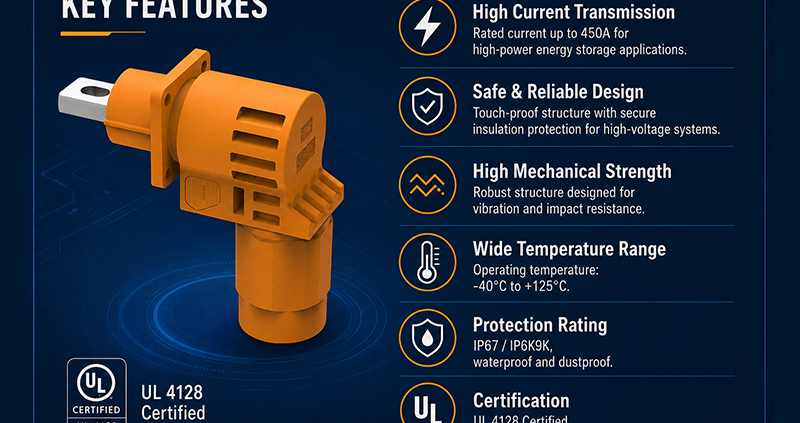
FPIC develops high-current connector solutions for energy storage and battery system applications, including:

These solutions are designed for BESS cabinet, battery module, and power distribution applications.
High-current connector used in BESS cabinet energy storage system


Application Areas

FPIC high-current connectors are suitable for:


Conclusion

As BESS systems scale in power density and deployment volume, connector design becomes a fundamental part of system engineering.

High-current connectors are no longer just electrical accessories—they are core components that influence safety, efficiency, and system lifecycle performance.

Selecting the right connector early in the design stage helps ensure a more reliable and scalable energy storage solution.


Contact FPIC

For energy storage connector development or 450A / 2000V high-current applications, FPIC provides engineering support and customized connector solutions.

Website: https://fpiconn.com/
Email: info@fpiconn.com


FAQ

1. What is a high-current connector used for in BESS?

It is used to connect battery modules, busbars, and power distribution systems inside energy storage cabinets.

2. Why are high-current connectors important in energy storage systems?

They affect thermal performance, safety, installation efficiency, and long-term system reliability.

3. Is current rating enough when selecting a connector for BESS?

No. Contact resistance, thermal behavior, and mechanical stability are equally important.
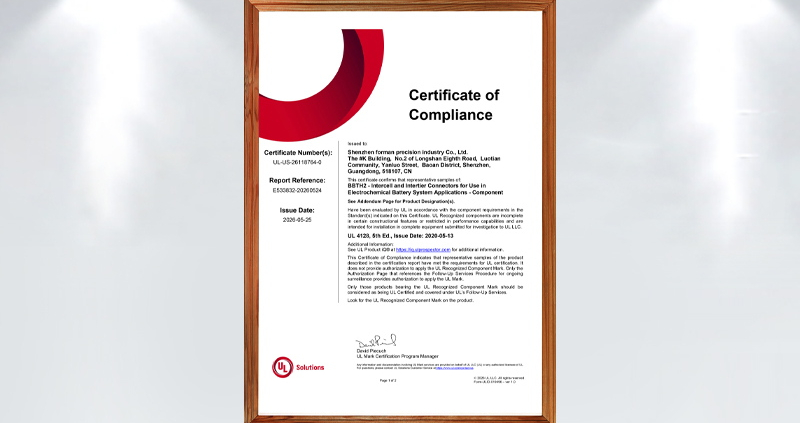
450A energy storage connector UL certificate

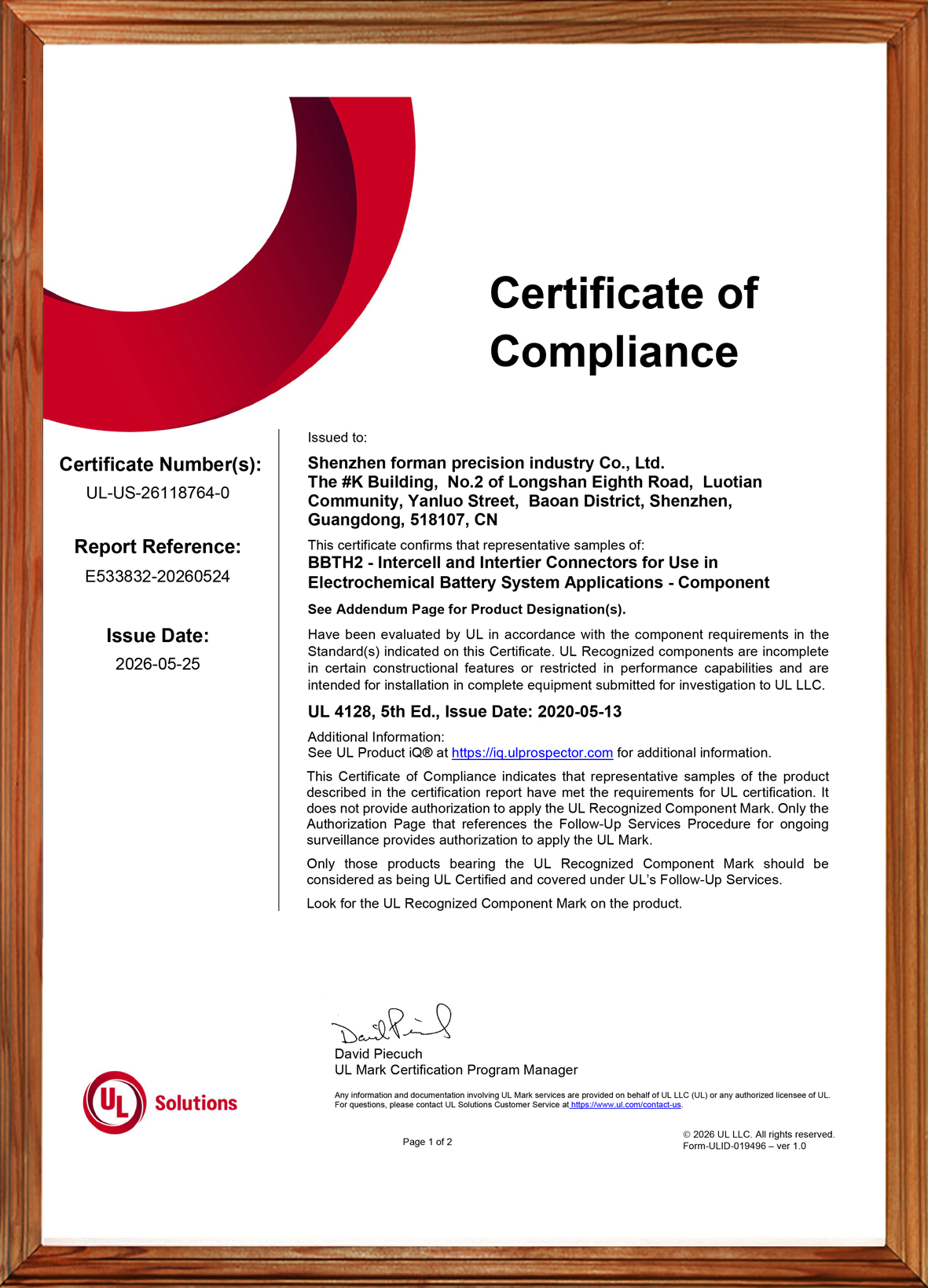
FPIC is pleased to announce that representative samples of our 2000V 450A energy storage connector series have been evaluated by UL for use in electrochemical battery system applications. The certification documents identify the product under UL 4128, 5th Edition, covering intercell and intertier connectors for battery system use.

This milestone strengthens FPIC’s capability in high-current battery interconnection solutions and provides additional confidence for customers developing energy storage equipment, battery packs, and related power distribution systems.

What This Certification Covers

According to the UL Certificate of Compliance, the evaluated product category is BBTH2 – Intercell and Intertier Connectors for Use in Electrochemical Battery System Applications – Component, with certificate number UL-US-26118764-0 and report reference E533832-20260524. The issue date is 2026-05-25.

The corresponding UL report describes the product as:

  • Cable Connectors
    Cat. Nos. A083-1F14-C150N-6A-##, A083-1F14-C150N-5A-##, A083-1F14-C150N-0A-##
  • Panel Mounted Inlets
    Cat. Nos. A083-2M14-E014F-6A-##, A083-2M14-E014F-5A-##, A083-2M14-E014F-0A-##

The report also states the key ratings of this series as 2000V DC and 450A. For the cable connector version, the evaluated conductor size is 300 kcmil.

FPIC 450A Energy Connector Meets UL 4128

Why This Matters for Energy Storage Applications

High-current battery connection points in energy storage systems demand more than basic electrical performance. They also require controlled insulation design, reliable mating, proper polarity identification, and suitability for integration into complete battery equipment.

The UL report identifies these products as intercell/intertier connectors intended for use in electrochemical battery equipment, including cable connector and panel mounted inlet configurations. The panel mounted inlet versions are intended for factory assembly onto copper conductors rated 90°C or higher and/or copper or copper alloy busbars in battery equipment.

For ESS manufacturers, battery pack integrators, and related equipment developers, this provides an important compliance reference point when evaluating connector solutions for high-voltage, high-current battery system designs.

Key Product Characteristics

Based on the UL report, FPIC’s 450A connector series includes the following core characteristics:

1. High Voltage and High Current Capability

The evaluated series is rated at 2000V DC and 450A, supporting demanding battery interconnection applications.

2. Cable and Panel-Mounted Configurations

The series includes both cable connector and panel mounted inlet versions, helping customers build matching connection interfaces for different battery system architectures.

3. Single-Pole Intercell / Intertier Connector Design

The report describes the cable connector products as insulated, single-pole mating intercell/intertier connectors, suitable for battery system connection needs.

4. Support for Battery Equipment Integration

The panel mounted inlet versions are intended for assembly to busbars or conductors in electrochemical battery equipment, which is especially relevant for energy storage cabinets, battery packs, and related systems.

Important Compliance Note

The UL certificate clearly states that these are UL Recognized components, not complete end-use equipment. It also states that the certificate itself does not provide authorization to apply the UL Recognized Component Mark; only products bearing the appropriate UL Recognized Component Mark and covered under UL follow-up services should be considered UL Certified within that program context.

In addition, the UL report notes that these devices are:

  • not suitable for disconnecting under load
  • not intended for use outside an equipment enclosure
  • not investigated for an environment rating
  • intended for use only in complete equipment where acceptability is determined in the end-use application

This is important for customers who are designing certified end products and need to evaluate the connector as part of the complete system.

What This Means for FPIC Customers

This UL milestone demonstrates FPIC’s continued progress in energy storage connector development and supports our ability to serve customers with more robust interconnection solutions for battery system applications.

For customers working on:

  • energy storage systems
  • electrochemical battery equipment
  • battery pack integration
  • power distribution interfaces
  • high-current cabinet connections

this development provides stronger confidence in FPIC’s capability to support demanding connector projects with both product development and manufacturing execution.

FPIC Energy Storage Connector Capability

FPIC has been continuously developing energy storage connector solutions for high-current and high-voltage applications. Our energy storage product direction includes connector and cable solutions designed for battery modules, battery packs, and related ESS equipment. FPIC’s internal product materials also describe energy storage connectors with features such as touch-proof design, multiple connection methods, and compliance direction aligned with UL 4128.

This new 450A certification-related progress further strengthens FPIC’s position in the energy storage connector segment.

Contact FPIC for Energy Storage Connector Projects

If you are developing battery packs, ESS cabinets, or related electrochemical battery equipment and need a reliable high-current connector solution, FPIC can support your project with product information, engineering communication, and manufacturing support.

Contact us to discuss your application requirements.