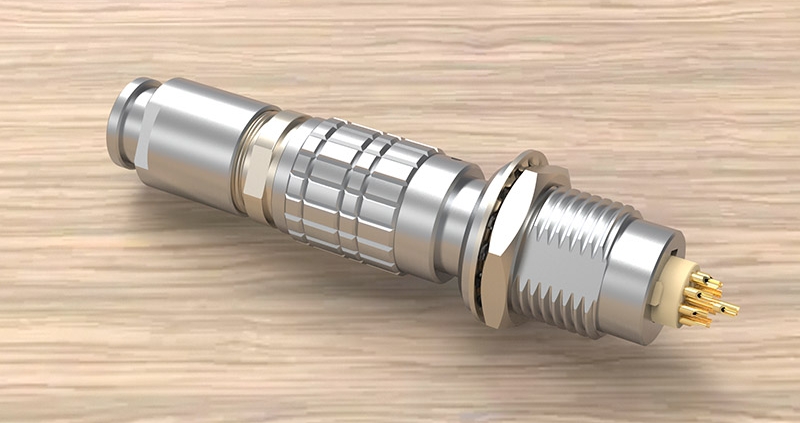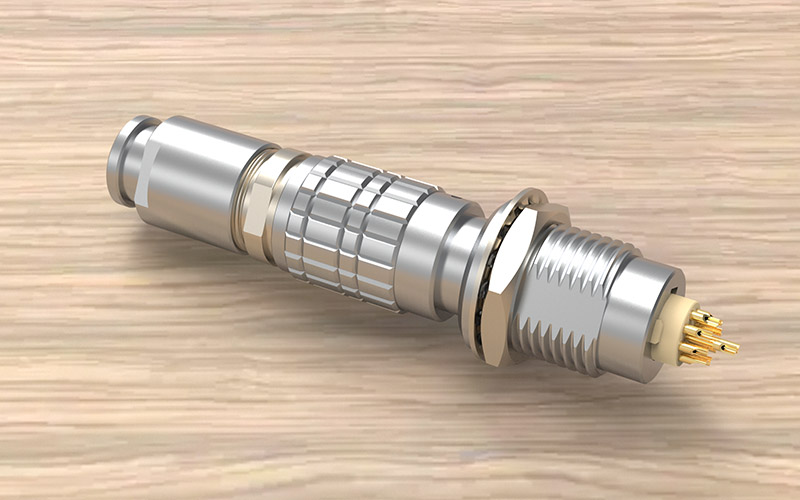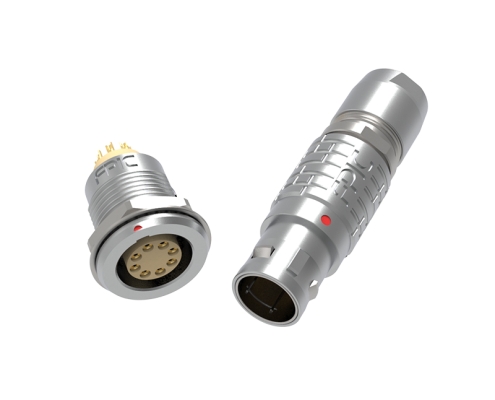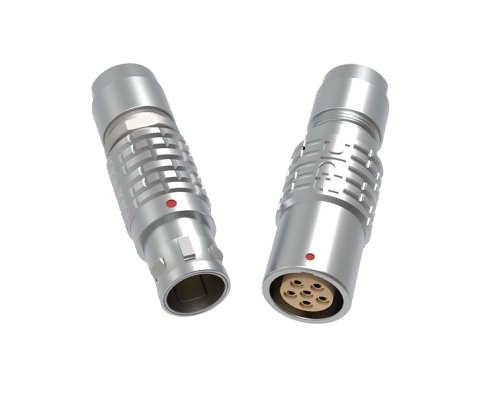
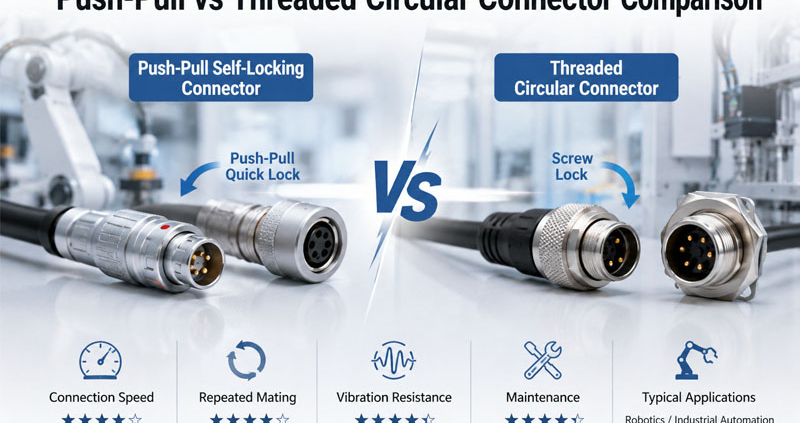
Circular connectors are widely used in industrial automation, robotics, medical devices, test equipment, and communication systems because they provide reliable electrical connections in demanding environments.
Two of the most common locking mechanisms are push-pull and threaded connectors. Both offer excellent electrical performance, but they are designed for different operating priorities.
When connectors are frequently connected and disconnected during equipment maintenance, tool changes, or production testing, the locking mechanism becomes just as important as the electrical specifications.
This article compares push-pull and threaded circular connectors from the perspective of repeated mating performance, helping engineers choose the right solution for long-term reliability.
Understanding the Two Locking Mechanisms
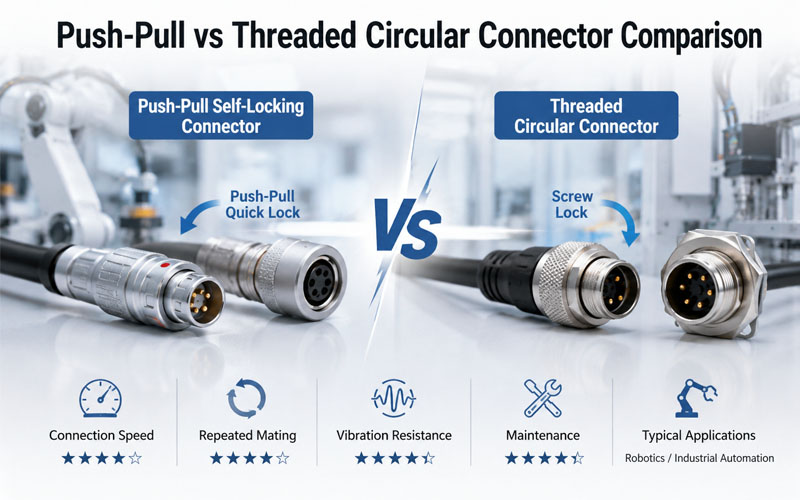
Although both connector types perform the same basic function, their locking principles are very different.
Push-Pull Connectors
Push-pull connectors automatically lock when inserted and can be released with a simple pull on the outer sleeve.
Key characteristics include:
- One-handed operation
- Automatic self-locking
- Fast connection and disconnection
- Compact structure
- Reduced installation time
They are commonly used in:
- Collaborative robots
- Medical devices
- Test equipment
- Portable instruments
- High-end industrial automation
Threaded Circular Connectors
Threaded connectors use screw threads to mechanically secure the connection.
Key characteristics include:
- High locking force
- Excellent vibration resistance
- Reliable mechanical stability
- Proven industrial performance
Typical applications include:
- Servo motors
- Machine tools
- Heavy industrial equipment
- Outdoor automation
- Mobile machinery
Repeated Mating Performance
Repeated insertion and extraction gradually wear connector contacts and locking mechanisms.
For applications requiring frequent maintenance or module replacement, engineers should consider:
- Mating cycle life
- Ease of operation
- Contact stability
- Mechanical wear
Push-pull connectors are generally designed for rapid, repeatable operation with minimal handling effort.
Threaded connectors remain highly durable but require additional time to tighten and loosen during each connection cycle.
Maintenance Efficiency
Maintenance time directly affects production uptime.
Push-Pull Advantages
Because no threading is required, push-pull connectors allow technicians to:
- Connect faster
- Disconnect quickly
- Operate with one hand
- Reduce maintenance time
- Lower the risk of improper tightening
These advantages are especially valuable in automated production lines where minimizing downtime is critical.
Threaded Connector Considerations
Threaded connectors require several turns to fully engage or disengage.
While this provides excellent mechanical security, it can increase maintenance time in applications with frequent connector changes.
Vibration Resistance
Industrial environments often expose connectors to continuous vibration and mechanical shock.
Threaded connectors have long been recognized for their strong vibration resistance due to their secure mechanical engagement.
Modern push-pull connectors, however, incorporate advanced self-locking mechanisms that provide reliable resistance to accidental disconnection while enabling much faster operation.
The choice depends on both the vibration level and maintenance frequency of the application.
Ergonomics and Operator Experience
Connector usability becomes increasingly important when operators repeatedly perform connection tasks.
Push-pull connectors offer several ergonomic benefits:
- Reduced hand fatigue
- Faster operation
- Intuitive locking
- Consistent mating force
Threaded connectors may require additional torque, particularly when connectors are installed in confined spaces.
Durability and Mating Cycles
Both connector types can achieve long service lives when properly designed.
Typical performance factors include:
- Contact material
- Gold plating thickness
- Spring design
- Housing material
- Manufacturing precision
High-quality push-pull connectors are commonly designed for 5,000 or more mating cycles, making them well suited for applications involving frequent reconnection.
Threaded connectors also provide excellent durability, particularly in installations where connectors remain mated for extended periods.
How FPIC Supports High-Reliability Connector Solutions
FPIC develops push-pull self-locking connectors, circular connectors, and customized connector solutions for robotics, medical equipment, industrial automation, and testing systems.
Our push-pull connector series combines fast mating, secure locking, high-quality gold-plated contacts, and long mating life to help customers improve maintenance efficiency without compromising reliability. Backed by more than 23 years of manufacturing experience, FPIC supports projects from prototype development through high-volume production.
Final Thoughts
Push-pull and threaded circular connectors both provide reliable electrical connections, but they excel in different environments.
For applications involving frequent mating cycles, rapid maintenance, and operator convenience, push-pull connectors often deliver significant productivity advantages.
For heavy-duty environments where maximum mechanical retention is the priority, threaded connectors remain an excellent choice.
Understanding the operating environment, maintenance requirements, and expected mating frequency is the key to selecting the most suitable connector.
FAQ
Are push-pull connectors suitable for industrial automation?
Yes. Modern push-pull connectors are widely used in industrial automation, robotics, and medical equipment because they combine secure locking with fast connection and disconnection.
Which connector type is better for repeated mating?
Push-pull connectors are generally better suited for applications requiring frequent connection cycles because they reduce operating time and simplify maintenance.
Are threaded connectors more resistant to vibration?
Threaded connectors typically provide excellent vibration resistance through their mechanical screw-locking design, making them ideal for heavy industrial applications.
How many mating cycles can a push-pull connector withstand?
High-quality push-pull connectors are commonly designed for 5,000 or more mating cycles, depending on the connector series and operating conditions.
How should engineers choose between push-pull and threaded connectors?
The decision should be based on maintenance frequency, vibration level, available installation space, required mating speed, and overall application requirements.
Looking for High-Performance Push-Pull and Circular Connectors?
Whether your application requires rapid repeated mating or maximum mechanical retention, FPIC provides high-quality push-pull self-locking connectors and circular connectors engineered for robotics, industrial automation, medical equipment, and precision instrumentation. Our engineering team can help you select the right connector solution to improve reliability, simplify maintenance, and support long-term performance.
Contact FPIC today to discuss your connector application.
Resources
- IEC 61076 – Connectors for Electrical and Electronic Equipment
https://webstore.iec.ch/
Provides international standards covering the design, performance, and testing of circular and industrial connectors. - IEC 60512 – Connectors for Electronic Equipment – Tests and Measurements
https://webstore.iec.ch/
Specifies standardized mechanical, electrical, and environmental test methods, including connector durability and mating cycle evaluations. - LEMO – Push-Pull Connector Technology
https://www.lemo.com/
Introduces the principles, advantages, and applications of push-pull self-latching connector systems. - ODU – Circular Connector Solutions
https://www.odu-connectors.com/
Provides technical resources on high-cycle mating connectors for medical, industrial, and testing applications. - TE Connectivity – Circular Industrial Connectors
https://www.te.com/
Offers guidance on connector selection, durability, vibration resistance, and industrial interconnect solutions.