Metal Terminals for Reliable Electrical Connections in Industrial Applications
Introduction
Metal terminals are critical components in electrical and electronic systems, serving as the primary interface for power and signal transmission. Their performance directly affects connection reliability, electrical efficiency, and long-term system stability. In demanding industries such as automotive, industrial automation, and new energy, selecting the right metal terminal is essential for ensuring safe and consistent operation.
FPIC designs and manufactures precision metal terminals to meet these requirements, offering stable electrical performance, mechanical durability, and flexible customization for a wide range of applications.
Why Metal Terminals Matter in Electrical Systems
Metal terminals are responsible for maintaining stable electrical contact between conductors, connectors, and devices. Poor terminal design or material selection can lead to increased contact resistance, overheating, signal loss, or premature failure.
High-quality metal terminals should provide:
- Low and stable contact resistance
- High current-carrying capability
- Secure mechanical retention
- Resistance to vibration and thermal cycling
- Long mating and service life
FPIC metal terminals are engineered to balance these electrical and mechanical requirements in real-world operating environments.
High-Conductivity Materials for Stable Performance
FPIC metal terminals are manufactured using high-quality copper and copper alloy materials. These materials provide excellent electrical conductivity while maintaining sufficient mechanical strength for crimping, press-fit, or spring-contact structures.
The use of solid copper-based materials ensures:
- Efficient current transmission
- Reduced electrical losses
- Stable performance under continuous load
- Reliable operation in vibration-prone environments
Material selection and processing are tightly controlled to ensure consistency across production batches.
Common Types of Metal Terminals
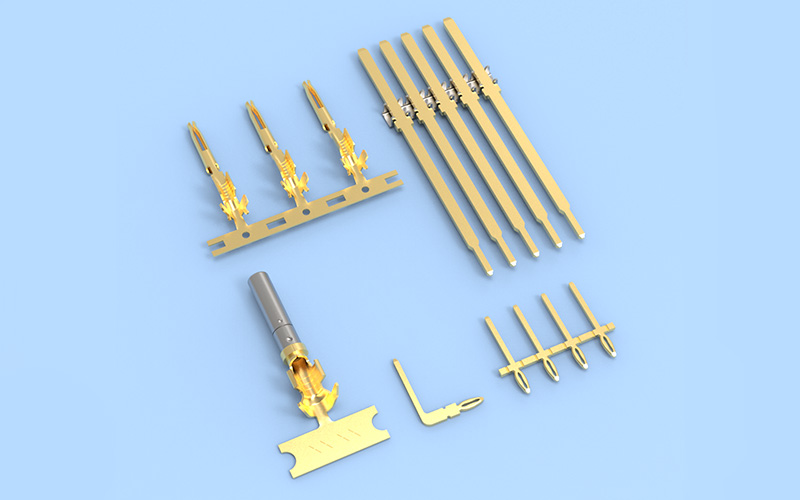
FPIC offers multiple terminal structures to match different assembly processes and application requirements.
Crimp Terminals
Crimp terminals are widely used in automotive and industrial wiring harnesses. They provide strong mechanical retention and reliable electrical contact when properly crimped, making them suitable for mass production.
Spring-Clip Terminals
Spring-clip terminals maintain consistent contact force over time and are ideal for applications exposed to vibration or frequent thermal changes.
Press-Fit Terminals
Press-fit terminals enable solder-free assembly, reducing thermal stress on PCBs while ensuring reliable mechanical fixation and electrical performance.
Composite Terminals
Composite terminals are designed for applications requiring frequent connection and disconnection. With optimized structure and materials, they can achieve mating cycle life exceeding 10,000 cycles, making them suitable for automotive and industrial control systems.
Surface Plating Options and Their Benefits
Surface plating plays a critical role in terminal performance and durability. FPIC metal terminals are available with multiple plating options to match different electrical and environmental requirements.
-
Gold plating: Excellent corrosion resistance and stable low contact resistance, suitable for signal and high-reliability applications
-
Silver plating: High conductivity and good performance in power transmission
-
Tin plating: Cost-effective solution for general industrial applications
Plating thickness and material can be customized based on operating conditions, mating frequency, and environmental exposure.
Durability and Long Service Life
FPIC metal terminals are designed for long-term use in demanding environments. Through optimized structural design and controlled manufacturing processes, terminals achieve high mechanical stability and long mating life.
Key durability features include:
- Low and stable contact resistance
- High resistance to vibration and mechanical stress
- Consistent performance across repeated mating cycles
- Suitability for automotive-grade and industrial applications
These characteristics help reduce maintenance requirements and improve overall system reliability.
Typical Applications of Metal Terminals
FPIC metal terminals are widely used across multiple industries, including:
- Automotive and new energy vehicles
- Industrial automation and control systems
- Transportation and rail equipment
- Medical and precision electronic devices
- Energy storage and power distribution systems
Their versatility makes them suitable for both standard products and customized system designs.
Custom Metal Terminal Solutions by FPIC
Beyond standard terminal designs, FPIC provides engineering-level customization to support OEM and system integration projects. Custom solutions can be developed based on drawings, samples, or application requirements.
Customization capabilities include:
- Terminal structure optimization
- Material and plating selection
- Integration with connectors and wire harnesses
- Prototype development and validation
- Scalable mass production
This approach ensures that metal terminals are precisely matched to application needs.
Why Choose FPIC Metal Terminals
With over 20 years of experience in connectors and cable assemblies, FPIC combines material expertise, precision manufacturing, and quality control to deliver reliable metal terminal solutions.
Key advantages include:
- Extensive experience in terminal and connector manufacturing
- In-house stamping, plating, and quality inspection
- Strong engineering support and fast response
- Flexible OEM and custom development capability
- Stable quality for global industrial customers
Conclusion
Metal terminals are small components with a significant impact on electrical system performance. Choosing the right terminal design, material, and plating is essential for achieving reliable and long-lasting connections.
FPIC metal terminals provide a balanced solution combining electrical performance, mechanical durability, and customization flexibility, making them a dependable choice for automotive and industrial applications.