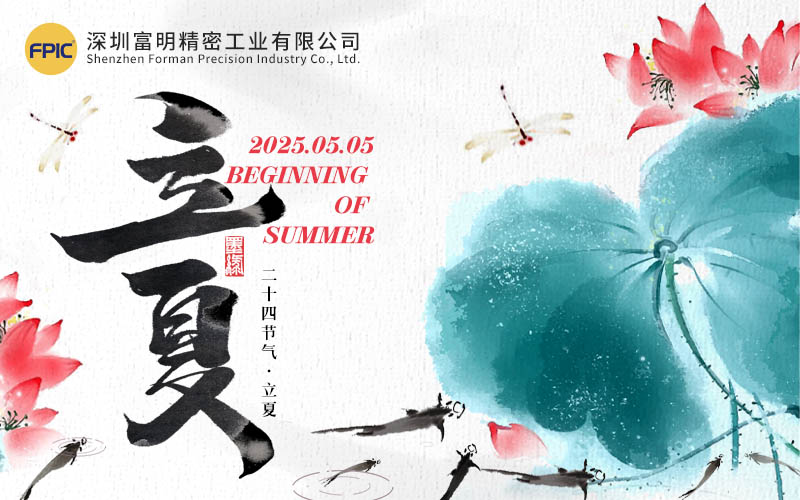
Lixia (Beginning of Summer): Welcoming the First Solar Term of Summer
Lixia, meaning “Beginning of Summer,” is one of the 24 Solar Terms in the traditional Chinese calendar. It marks the official start of summer and signals the transition from spring’s growth to the vigorous development of early summer.
Rather than indicating extreme heat, Lixia represents the moment when nature enters a phase of rapid expansion, vitality, and maturity.
When Does Lixia Occur?
Lixia usually falls on May 5th or 6th each year, when the sun reaches 45° of celestial longitude. It is the first solar term of summer, followed by Xiaoman (Grain Full) and Mangzhong (Grain in Ear).
Why Is It Called “Beginning of Summer”?
The name Lixia (立夏) literally means “establishing summer.”
Ancient Chinese scholars used the word “Li” (立) to indicate the formal beginning of a season.
According to Yueling Qishierhou Jiejie (《月令七十二候集解》):
“Lixia is the solar term of the fourth lunar month. ‘Li’ signifies establishment, as in spring. ‘Xia’ means ‘growth.’ At this time, all things grow large and flourish.”
This explanation emphasizes that Lixia marks a period when plants, animals, and natural forces begin to expand rapidly, laying the foundation for the peak of summer.
Natural Phenomena During Lixia
Classical literature vividly describes the seasonal changes of early summer.
The Book of Rites · Monthly Ordinances (《礼记·月令》) records:
“Frogs begin to croak, earthworms emerge, creeping gourds grow, and bitter herbs flourish.”
These observations reflect the three phenological stages (三候) of Lixia:
- Frogs and insects become active and vocal near fields and ponds
- Earthworms surface to breathe as soil temperatures rise
- Wild plants and herbs grow rapidly along rural paths
Together, these signs depict the lively ecological scene at the beginning of Mengxia (early summer).
Weather Characteristics of Lixia
Lixia is closely associated with noticeable climate changes:
- Rising temperatures
- Longer daylight hours
- Increased rainfall in many regions
- Rapid plant growth and stronger biological activity
Although heat waves are not yet dominant, Lixia signals that summer warmth has firmly arrived.
What People Traditionally Do During Lixia
1. Seasonal Health Adjustment
In traditional Chinese medicine, Lixia is associated with heart health and emotional balance. People are encouraged to:
- Maintain a light diet
- Avoid excessive heat or fatigue
- Adjust daily routines to longer daylight hours
2. Preparing for Agricultural Growth
Historically, Lixia was a crucial time for farmers to:
- Manage irrigation
- Monitor crop growth
- Control pests and weeds
It marked the beginning of intensive fieldwork leading toward summer harvests.
3. Cultural Awareness of Seasonal Change
Lixia reminds people to:
- Gradually shift clothing styles
- Adapt to warmer temperatures
- Respect the rhythm of natural growth
These practices reflect the traditional philosophy of living in harmony with nature.
Cultural Significance of Lixia
Lixia symbolizes energy, vitality, and expansion. It represents a stage when life accelerates and nature moves toward abundance.
As part of the 24 Solar Terms, Lixia demonstrates how ancient Chinese society closely observed environmental patterns and integrated them into daily life, agriculture, and health practices.
Conclusion
Lixia, the Beginning of Summer, is more than a seasonal marker—it is a reminder of growth, preparation, and balance. By observing the natural signs described in classical texts, people learned to align their actions with the rhythms of the environment.
Today, Lixia continues to enrich our understanding of seasonal change and the enduring wisdom behind the 24 Solar Terms.
References
- 《月令七十二候集解》 (Yueling Qishierhou Jiejie) – Traditional explanation of the 24 Solar Terms
- 《礼记·月令》 (Book of Rites · Monthly Ordinances) – Classical record of seasonal phenomena
- UNESCO – The Twenty-Four Solar Terms: Knowledge and Practices in China. Source: https://ich.unesco.org
- China Meteorological Administration (CMA) – Introduction to the 24 Solar Terms. Source: https://www.cma.gov.cn