
Heavy-Duty Connectors for Industrial Applications
FPIC heavy-duty connectors are engineered to provide reliable power, signal, and data connections in harsh industrial environments. Designed for high mechanical strength, environmental protection, and long service life, our heavy-duty connectors are widely used in industrial automation, machinery, rail transit, energy equipment, and other demanding applications.
What Are Heavy-Duty Connectors?
Heavy-duty connectors are industrial rectangular connectors designed for high current, high reliability, and frequent mating cycles. Compared with standard connectors, heavy-duty connectors offer:
- Strong mechanical locking
- High protection ratings
- Modular inserts for power, signal, and data
- Secure and fast installation
- Long-term durability in harsh environments
FPIC heavy-duty connectors are developed to meet modern industrial requirements for safety, efficiency, and scalability.
FPIC Heavy-Duty Connector Series
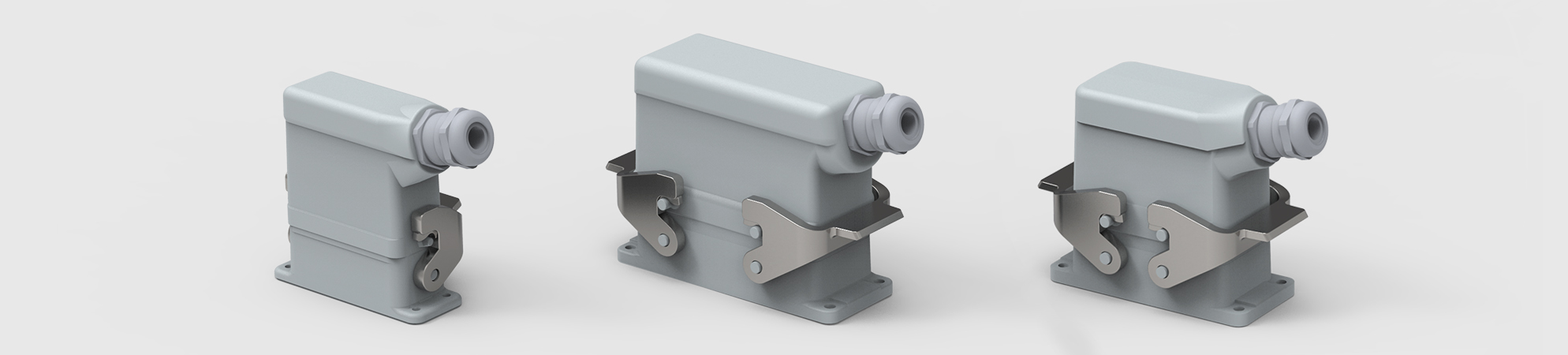
- HDC-HA Series
- Pin options: 3, 4, 10, 16
- Housing: die-cast aluminum, zinc alloy, nylon
- Termination: bolt / screw connection
- Cable outlet: top entry or side entry
- Reliable grounding design
- Suitable for standard industrial power and signal transmission
- HDC-HE Series
- Pin options: 6, 10, 16, 24, 32
- Operating temperature: -40°C to +150°C
- Termination options: screw, crimp, spring clamp
- Contact plating: silver or gold
- Single or double locking levers
- Suitable for harsh and high-temperature environments
- HDC-HEE Series
- Pin options: 10, 18, 32, 46
- High-density insert design
- Multiple wiring methods available
- Customizable insert colors
- Designed for flexible and industrial solutions
- Suitable for standard industrial power and signal transmission
Key Features of FPIC Heavy-Duty Connectors
IP67 Protection Rating:
Provides reliable sealing against dust, moisture, rain, snow, and harsh industrial conditions.
Robust Metal Housing:
Die-cast aluminum housing with uniform surface coating for corrosion resistance and mechanical strength.
Robust Metal Housing:
Die-cast aluminum housing with uniform surface coating for corrosion resistance and mechanical strength.
High-Quality Contacts:
Silver-plated copper contacts ensure low contact resistance and stable electrical performance.
Flame-Retardant Design:
Compliant with EN 45545 flame-retardant standards for railway rolling stock applications.
Customization Options
FPIC provides full customization services for heavy-duty connectors:
- Pin count and insert configuration
- Housing material and surface finish
- Locking mechanism type
- Termination method selection
- Cable diameter and gland options
- Logo marking and private labeling
From design and prototyping to mass production, we support zero-risk development for customized industrial connector solutions.
Why Choose FPIC Heavy-Duty Connectors?
- Over 20 years of connector manufacturing experience
- Certified with ISO 9001, ISO 14001, IATF 16949, ISO 45001
- Strong R&D and customization capability
- Stable mass production and fast response
- In-house quality control and process management
- Advanced MES system ensuring production traceability
How to Choose the Right Heavy-Duty Connector (HDC)?
Selecting the right heavy-duty connector (HDC) is critical to ensuring system reliability, safety, and long-term performance in industrial applications. Below are the key factors to consider when choosing an HDC solution.
1
2
3
4
5
6
7

1
Hood
2
Cable Gland: Metal/Plastic Cable Gland
3
Male Insert
4
Contacts
5
Female Insert
6
Housing
7
Metal: 304 SS Material
1. Define Electrical Requirements
Start by confirming the electrical parameters of your application:
- Rated voltage
- Rated current
- Power, signal, or mixed transmission
- Insulation and impulse voltage requirements
Different HDC series (HA, HE, HEE) support different current ratings and pin densities, making this the first step in correct selection.
2. Select the Appropriate Pin Count & Insert Type
Choose the pin configuration based on your system design:
- Low pin count (3 / 4 pins): Power or simple signal transmission
- Medium pin count (10 / 16 pins): Power + control signal integration
- High pin count (24 / 32 / 46 pins): High-density control and signal applications
Modular insert designs allow flexible combinations of power, signal, and data within one connector interface.
3. Choose the Termination Method
The termination method impacts installation efficiency and long-term reliability:
- Screw termination: Easy installation and maintenance
- Crimp termination: Consistent quality for mass production
- Spring clamp / push-in: Fast wiring and vibration resistance
Select the method that best matches your production process and field maintenance needs.
4. Consider Installation Method & Housing Style
Installation conditions directly affect connector performance:
- Cable entry: Top entry or side entry
- Mounting style: Panel mount, bulkhead mount, or base mount
- Housing material: Die-cast aluminum, zinc alloy, or plastic
Compact installations may require specific entry directions and low-profile housings.
5. Evaluate Environmental & Protection Requirements
For harsh industrial environments, protection level is critical:
- IP65 / IP67 protection against dust and water
- Resistance to vibration, shock, oil, and chemicals
- Operating temperature range (-40°C to +125°C or higher)
For railway and transportation applications, flame-retardant compliance such as EN 45545 should also be considered.
6. Apply Coding & Locking for Safety
To prevent mis-mating and improve operational safety:
- Use coding pins or keying options
- Select single or double locking levers
- Ensure grounding continuity where required
These features enhance system safety and maintenance efficiency.
FPIC supports customized heavy-duty connector solutions, from design and prototyping to mass production, ensuring zero-risk development.
If you’re unsure which heavy-duty connector fits your application, our engineering team is ready to help. Simply share your electrical requirements, installation conditions, and environment, and we’ll recommend the most suitable HDC solution. 📧 Email: info@fpiconn.com